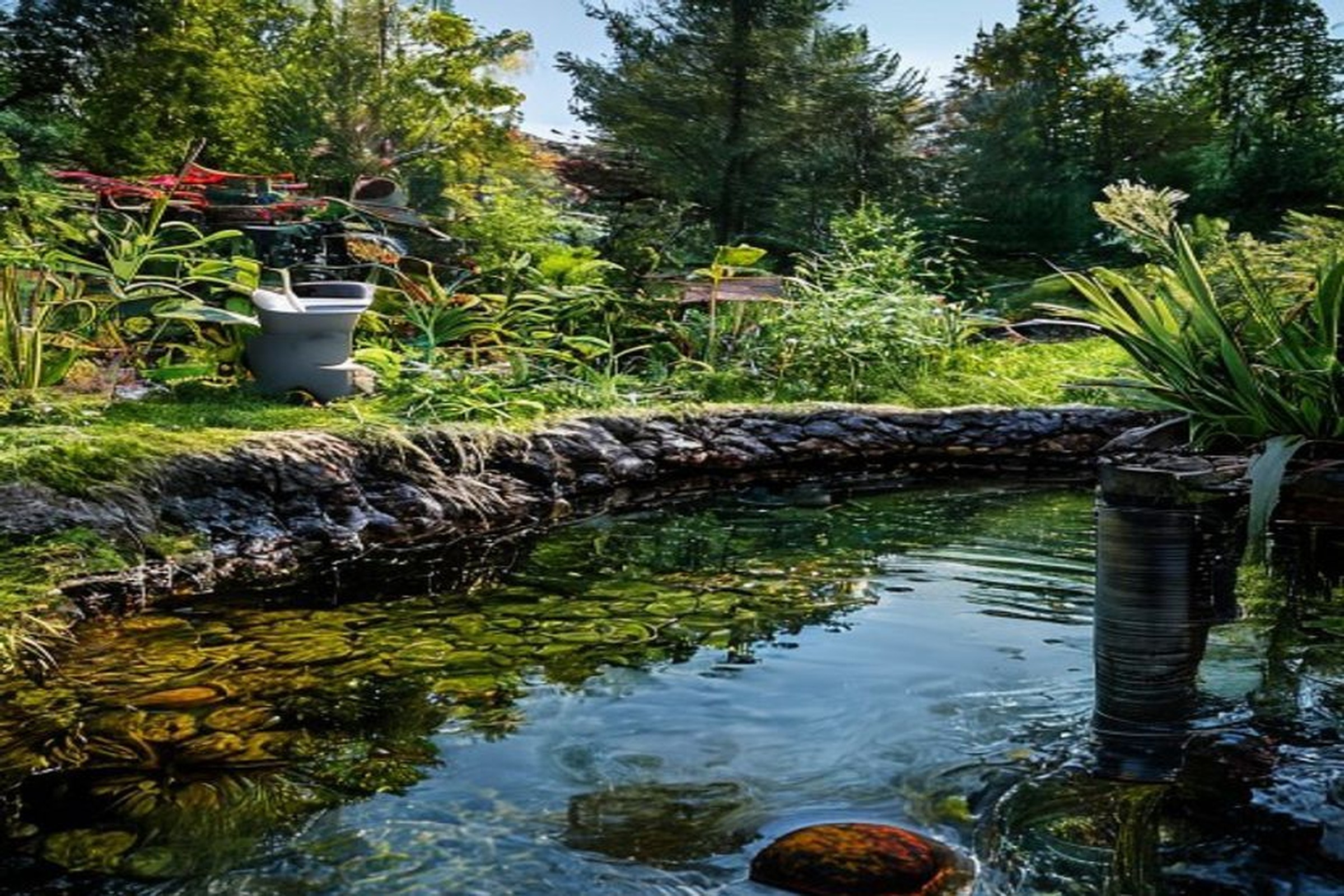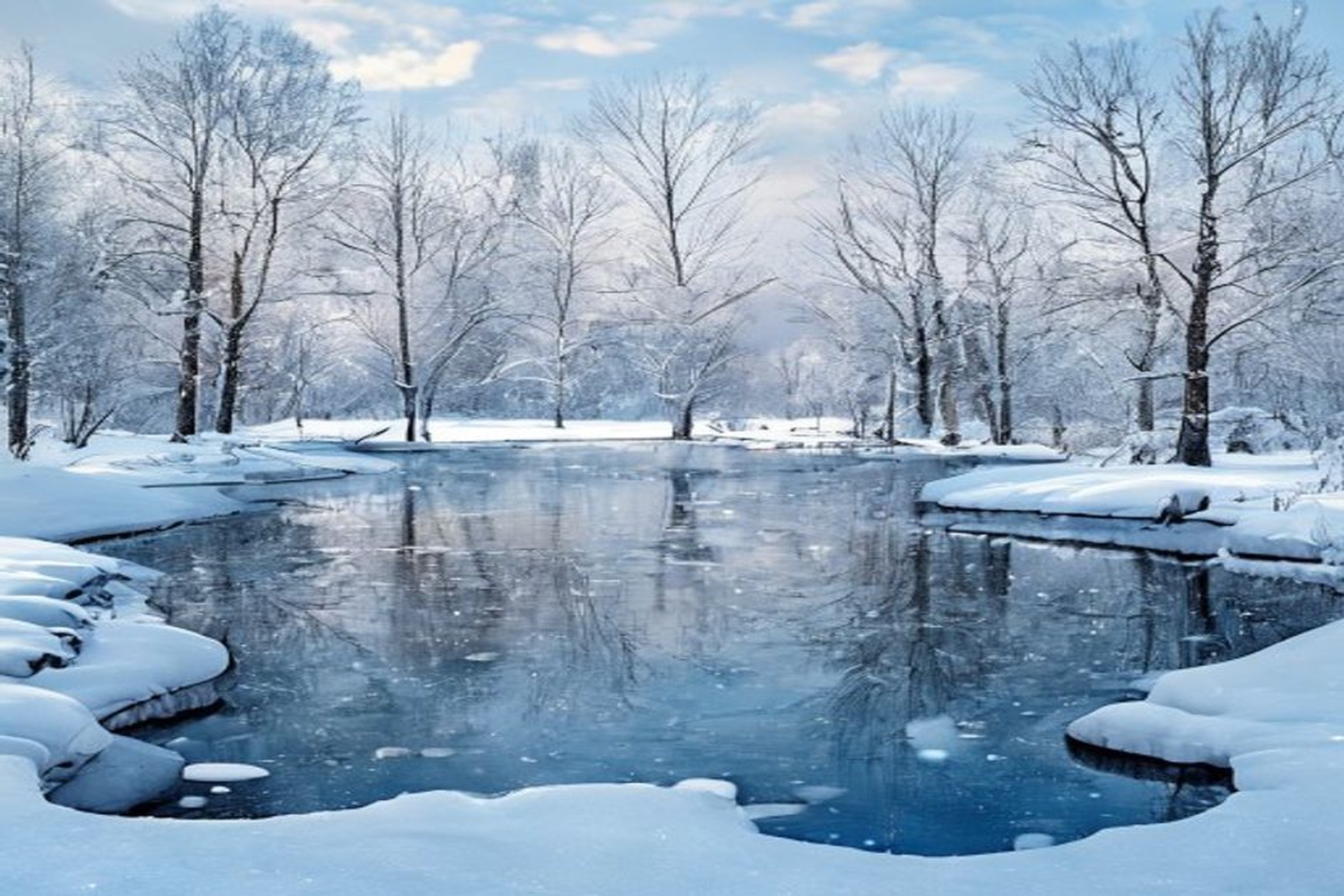
Aquatic plants are the soul of any natural pond. Without them, the water remains a simple basin - static, vulnerable to algae, and devoid of life. With them, the pond becomes a complete ecosystem, capable of self-regulation, providing shelter for wildlife, and creating a landscape of breathtaking beauty. In this guide, the Iazuri Naturale team presents the most suitable aquatic plants for ponds in Romania, with practical advice tested across dozens of projects completed in Transylvania and throughout the country.
Why are aquatic plants essential?
Natural biological filtration
Aquatic plants absorb nitrates and phosphates from the water - precisely the substances that fuel algae growth. A well-planted pond can reduce nitrate concentrations by 60-80%, without any mechanical filter. The roots of marginal plants function as living filters, hosting colonies of beneficial bacteria that decompose organic matter.
Water oxygenation
Submerged plants produce dissolved oxygen through photosynthesis, essential for fish and microorganisms in the pond. A single healthy clump of Ceratophyllum can oxygenate up to 1,000 litres of water. For a balanced pond, we recommend that submerged plants cover at least 30-40% of the bottom surface.
Thermal balance and protection
The floating leaves of water lilies provide shade, reducing water temperature in summer by 3-5°C. This shade limits evaporation and creates refuge zones for fish. Ideally, floating plants should cover 50-60% of the water surface during the summer months.
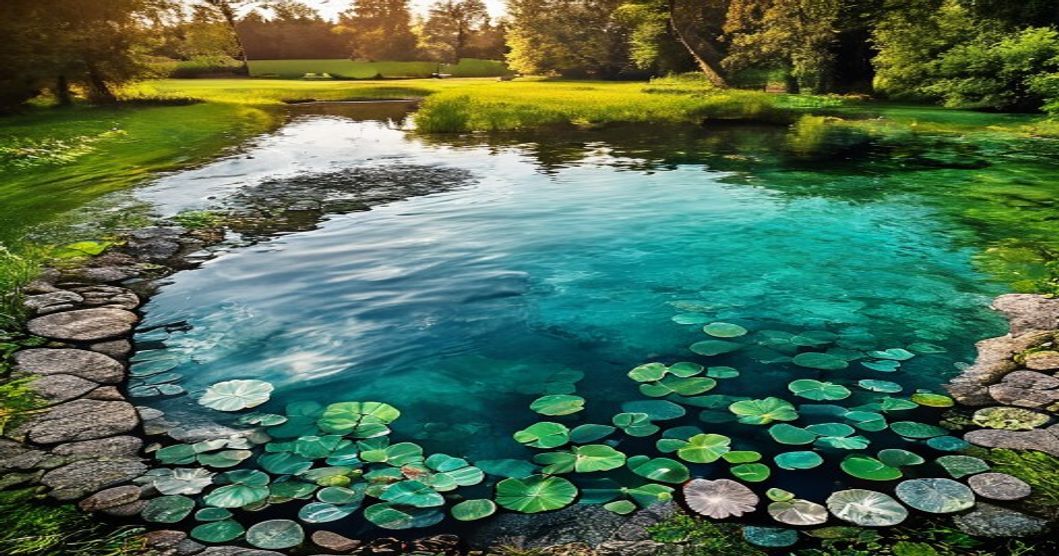
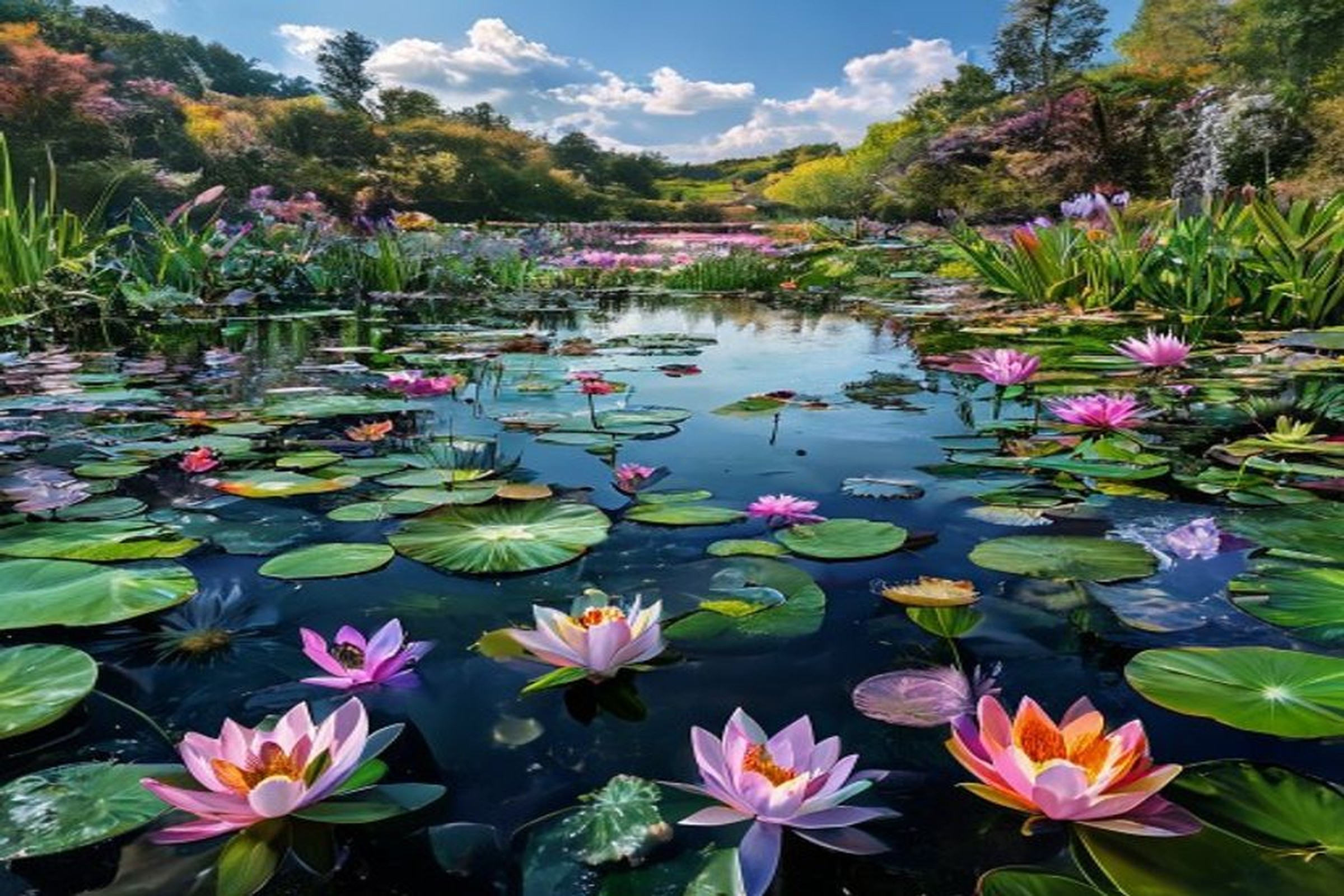
Water lily (Nymphaea) - the queen of the pond
No pond is complete without at least one water lily. This iconic plant combines extraordinary beauty with real practical benefits.
Growing conditions
- Water depth: between 40 and 100 cm above the rhizome. Dwarf varieties are content with 30-50 cm, while vigorous ones need 60-100 cm.
- Sunlight: a minimum of 5-6 hours of direct sunlight per day. In a shaded position, the water lily will produce leaves but few or no flowers.
- Substrate: heavy clay soil, without compost or peat. Plant in special baskets with a diameter of 30-40 cm.
- Temperature: hardy varieties withstand Romanian winters without problems, provided the rhizome is below the frost line.
Recommended varieties for Romania
For medium-sized ponds (15-40 sq m), we recommend hardy varieties such as Nymphaea 'Marliacea Chromatella' (pale yellow, very robust), Nymphaea 'Attraction' (garnet red, spectacular), and Nymphaea 'Alba' (white, classic, native to Europe). For small ponds, Nymphaea 'Pygmaea Helvola' is ideal - it thrives in just 20-30 cm of water.
Maintenance
Remove yellowed leaves regularly, cutting the stems as close to the rhizome as possible. Fertilise with special aquatic plant tablets once a month, between May and August. Every 3-4 years, lift the rhizome, divide it, and replant in fresh substrate.
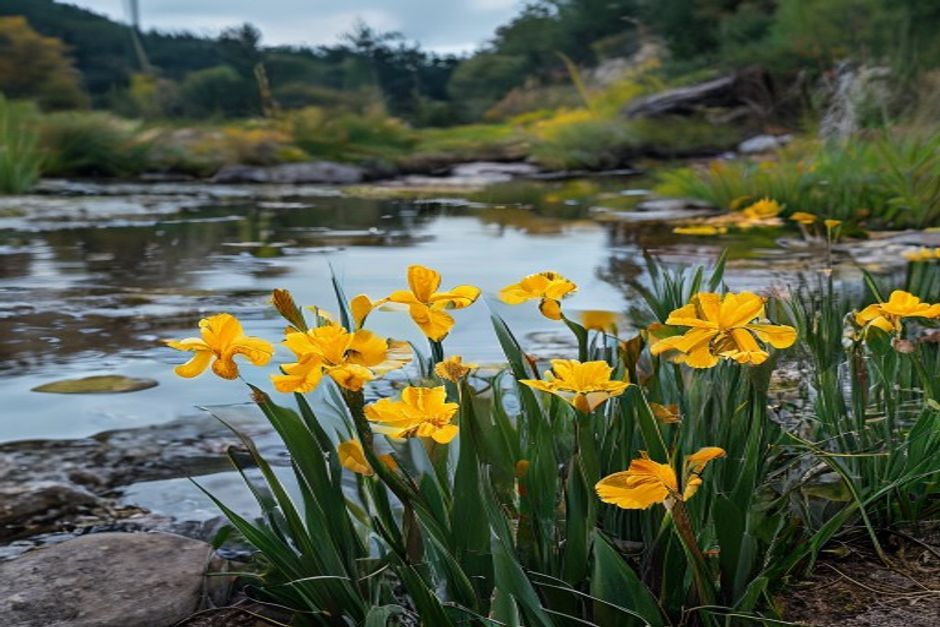
Water iris (Iris pseudacorus) - native and spectacular
Iris pseudacorus is a plant native to Romania, found naturally along riverbanks and in marshy areas. This makes it extremely well adapted to our climate, resilient, and easy to maintain.
Characteristics
- Height: 60-120 cm, with sword-shaped leaves of an intense green.
- Flowers: brilliant yellow, appearing in May-June, with a diameter of 8-10 cm.
- Planting zone: pond margin, at a depth of 0-20 cm of water above the roots.
- Spread: spreads via rhizomes - plant in baskets if you wish to control its growth.
Role in the ecosystem
The strong roots of the water iris stabilise the pond banks, preventing erosion. The dense foliage provides shelter for frogs, dragonflies, and other invertebrates. In terms of filtration, the iris is particularly efficient at absorbing heavy metals from the water.
Iazuri Naturale designs and installs custom filtration systems for any type of pond.
View our services →Hornwort (Ceratophyllum demersum) - the oxygenation champion
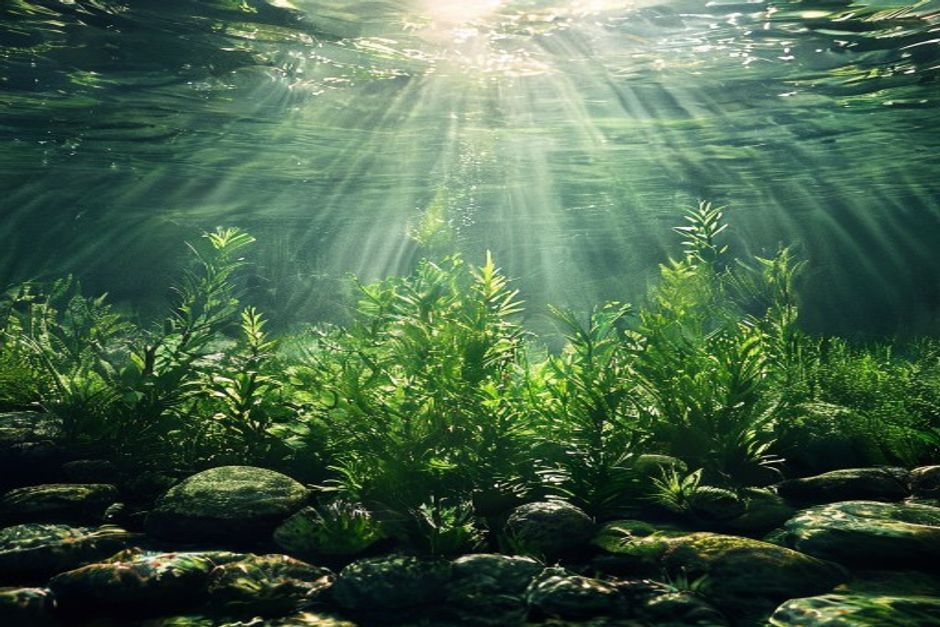
If you had to choose just one submerged plant for your pond, it would be Ceratophyllum demersum. Commonly known as hornwort due to the shape of its branching leaves, this plant is the most efficient natural oxygenator available.
What makes it special
- No roots: it floats freely in the water, absorbing nutrients directly through its leaves. This makes it extremely efficient at filtration and easy to manage.
- Wide temperature range: functions at temperatures between 4 and 30°C, remaining active even during the cold season.
- Rapid growth: under good conditions, it can grow 5-10 cm per week.
- Inhibits algae: studies show that Ceratophyllum releases allelopathic substances that inhibit the growth of unicellular green algae.
Simply introduce a few strands into the pond - there is no need to plant them in substrate. We recommend 5-7 strands per cubic metre of water.
Dwarf bulrush (Typha minima) - elegant and compact
The classic bulrush (Typha latifolia) can reach 2-3 metres and can become invasive. The solution is Typha minima - a compact version with the same characteristic club-shaped flower heads, but at a much more manageable scale.
- Controllable height: 40-60 cm, rarely exceeding 70 cm. Perfect for ponds with a surface area of 5-20 sq m.
- Decorative flower heads: small, round, chocolate-brown heads appear in July-August and persist through winter.
- Planting zone: 5-15 cm of water above the roots.
- Hardiness: fully hardy, tolerating temperatures down to -25°C without protection.
Plant Typha minima in groups of 3-5 specimens spaced 15-20 cm apart, for a natural visual effect.
Water lettuce (Pistia stratiotes) - the natural floating filter
Pistia stratiotes is a tropical floating plant with remarkable filtration capacity. Although it does not survive Romanian winters, it is worth including in any pond for the warm season.
Its long roots (which can reach 30-40 cm) function as a filtration curtain, trapping suspended particles and absorbing significant quantities of nitrates and phosphates. A single mature specimen can effectively filter 200-300 litres of water.
- Introduction period: no earlier than May, when the water temperature consistently exceeds 15°C.
- Reproduction: reproduces via stolons. In one season, a single specimen can produce 20-30 plantlets.
- Control: remove excess regularly, so as not to cover more than 40% of the water surface.
- Autumn: before the first frost, remove a few specimens and keep them in a container of water indoors.
"A well-planted natural pond maintains itself to the extent of 80%. The secret lies not in expensive equipment, but in the correct choice of plants and in respecting the depth zones. Nature does the hardest work - we just need to help it a little." - Iazuri Naturale Team
Need personalized advice? Our team offers free consultation for your project.
Schedule a consultation →Other recommended plants
Caltha palustris (Marsh marigold)
One of the first plants to bloom in spring (March-April), with bright yellow flowers. Native to Romania, it grows in the marginal zone at 0-10 cm depth. Height: 20-40 cm.
Myriophyllum spicatum (Eurasian watermilfoil)
An excellent oxygenator, complementary to hornwort. Its finely feathered leaves create an ideal habitat for fish fry. Plant in substrate at a depth of 30-80 cm.
Elodea canadensis (Canadian waterweed)
Under the controlled conditions of a pond, Elodea is a valuable submerged plant that efficiently oxygenates the water and consumes large quantities of nutrients. It is especially important in the first years after pond construction.
Nuphar lutea (Yellow water lily)
The more robust relative of the classic water lily, Nuphar lutea grows in more challenging conditions - deeper water (up to 150 cm), gentle currents, partial shade. An excellent choice for large ponds or deeper zones.
How to plant correctly
The right substrate
Use natural clay or heavy clay soil, free of organic matter. Compost, peat, and potting soil have no place in a pond - they release excess nutrients and promote algae. Over the substrate, apply a 3-5 cm layer of gravel with a grain size of 8-16 mm.
Depth zones
- Marsh zone (0-10 cm): Caltha palustris, Iris pseudacorus, aquatic mosses. Recommended width: 30-50 cm.
- Marginal zone (10-30 cm): Typha minima, Pontederia cordata. Recommended width: 40-60 cm.
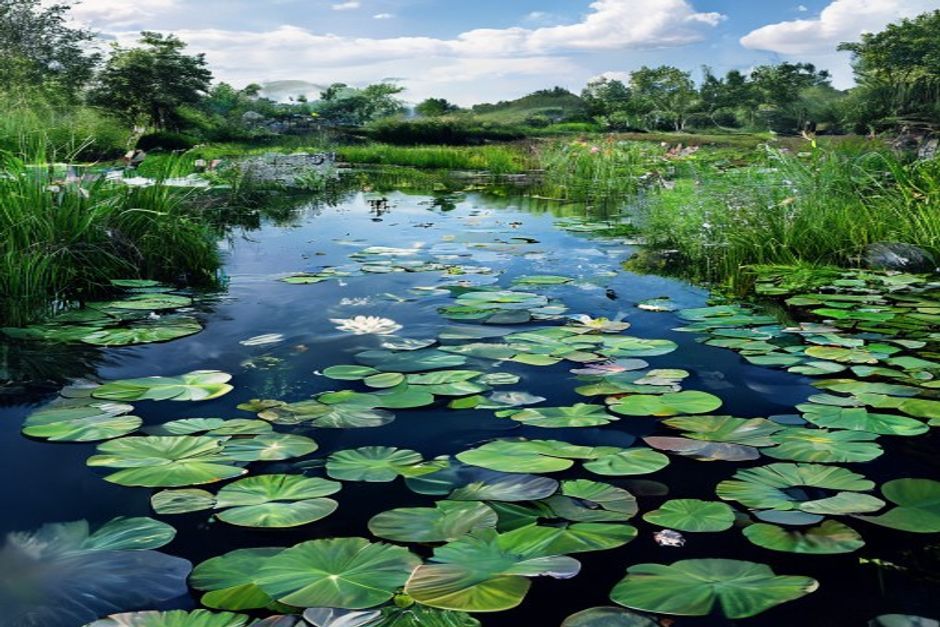
- Deep water zone (40-120 cm): Nymphaea, Nuphar lutea, submerged plants. This typically represents 50-60% of the pond surface.
Optimal planting period
The best time is between April and June, when the water temperature exceeds 12-15°C. Water lilies are ideally planted in May. Submerged plants can be introduced later, up to July.
Aquatic plant calendar
Spring (March - May)
- March: Caltha palustris blooms. Remove dead leaves from marginal plants.
- April: Begin new plantings. Divide marginal plants that have grown too large.
- May: Plant new water lilies, introduce Pistia stratiotes. Fertilise water lilies with special tablets.
Summer (June - August)
- June: The iris is in full bloom. Monitor floating plant coverage - do not exceed 60%.
- July: Harvest excess submerged plants. Fertilise water lilies a second time.
- August: Maintain the water level by topping up with rainwater or rested tap water.
Autumn (September - November)
- September: Reduce fertilisation. Retrieve Pistia specimens for overwintering indoors.
- October: Cut back the foliage of marginal plants to 10-15 cm above water level. Stretch a protective net over the pond.
- November: Move water lily baskets to the deepest area of the pond (minimum 40-50 cm depth).
Winter (December - February)
- Minimal activity. Do not break the ice with heavy blows. Leave the dried stems of the bulrush intact - they function as natural aeration tubes.
Common mistakes when planting a pond
- Too few plants at the start - vegetation coverage should reach a minimum of 50-60% of the water surface in the first season.
- Using potting soil as substrate - the released nutrients will cause an algae explosion. Use only natural clay.
- Planting water lilies too deep from the start - begin with the rhizome at 20-30 cm below the surface and lower gradually.
- Ignoring depth zones - design the pond with at least three depth levels.
- Introducing invasive plants - avoid species such as Myriophyllum aquaticum or Eichhornia crassipes, listed as invasive in the EU.
- Neglecting autumn maintenance - dead leaves left in the water decompose and release toxic gases.
- Lack of submerged plants - hornwort, watermilfoil, or Elodea are not spectacular, but they are indispensable for water balance.
Aquatic plants are not merely a decorative element - they are the foundation of a healthy and functional natural pond. If you would like help with designing and planting your pond, the Iazuri Naturale team is at your service with the experience gained from building natural ponds across Romania.