Preparing your natural pond for the cold season - a complete guide
With the first cool nights of September, the natural pond begins to send subtle signals: water lily leaves lose their vigour, fish become more sluggish in their movements, and the water takes on an almost crystalline clarity. This is the moment when, as a responsible owner, you should begin preparations for winter. A well-prepared pond will not only survive the cold season but will emerge from it healthier and more biologically balanced than before.
In over ten years of experience with natural ponds in the Transylvanian climate, we have learned that the difference between a pond that thrives and one that suffers after winter is almost always made in the months of October and November. The preparation is not complicated, but it requires attention, consistency, and respect for the rhythms of nature.
Autumn cleanup - the foundation of a healthy pond
Removing organic debris
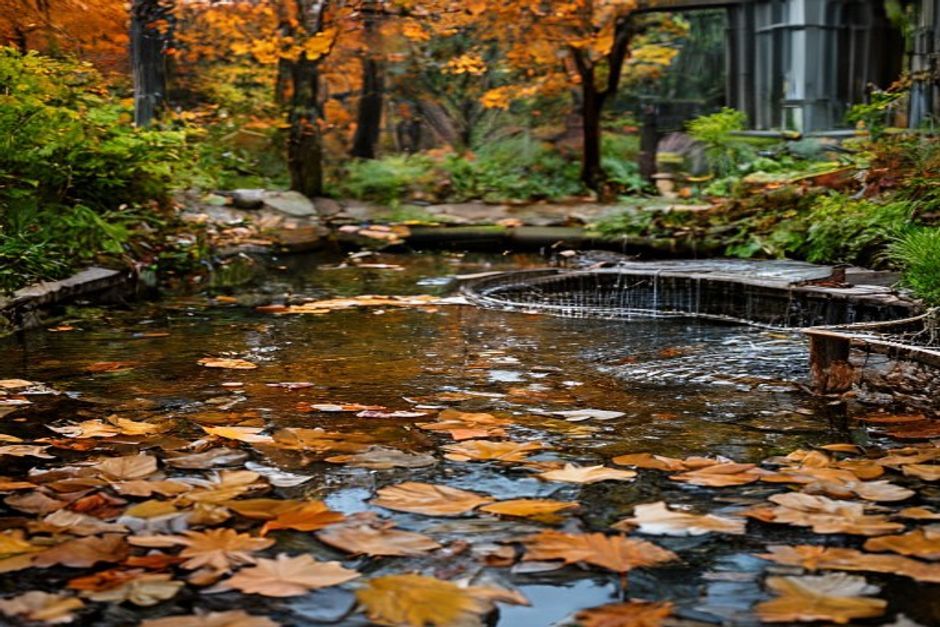
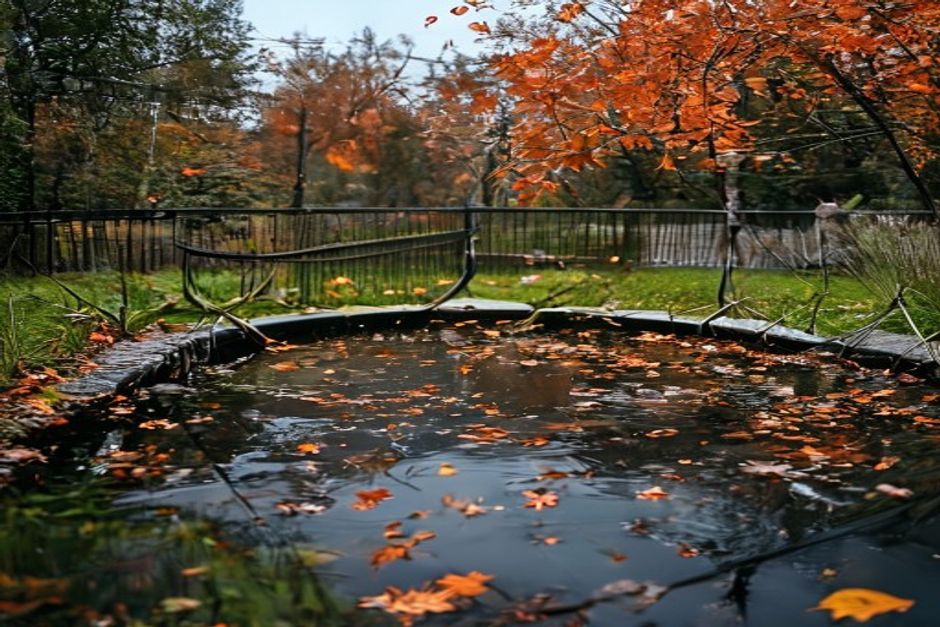
The first and most important step is a thorough cleaning of the organic matter accumulated over the summer. Fallen leaves, dead plant remains, and organic sediment pose a serious threat during winter. Under the ice layer, the decomposition of these materials consumes oxygen and releases toxic gases - primarily hydrogen sulphide and methane - which can become lethal for fish and beneficial microorganisms.
Begin by manually removing all visible leaves and plant debris from the water surface and the bottom of the pond. For ponds with a surface area exceeding 20 square metres, a collection net with a 3-4 metre telescopic handle is indispensable. The process must be repeated every 2-3 days during the period of heavy leaf fall, which in the Transylvania region typically extends from mid-October to the end of November.
Installing a protective net
The most effective method of preventing leaf accumulation is installing a protective net over the pond. Choose a net with 15-20 millimetre mesh, fine enough to stop leaves but wide enough to allow rain and light through. The net should be stretched at least 30 centimetres above the water surface, supported on lateral frames, to avoid direct contact with the water and the formation of pockets where leaves gather.
Secure the edges of the net with stones or ground hooks, checking that there are no gaps through which wind can introduce leaves. A 30 square metre pond typically requires a net of approximately 40-45 square metres, accounting for the additional margins needed for securing.
Cleaning the bottom sludge
If the sludge layer on the pond bottom exceeds 5 centimetres, partial vacuuming is recommended before the frost arrives. Do not remove all the sludge - a thin layer of 2-3 centimetres is beneficial, as it hosts useful bacteria and provides shelter for some organisms during winter. Vacuuming is best done at water temperatures between 10 and 15 degrees Celsius, when biological activity is still sufficient to compensate for the disturbance.
"Over the years, we have observed that ponds prepared with care in October look spectacular in April. It is not just about survival, but about giving the ecosystem a real advantage at the start of spring. A clean pond entering winter means clear water, vigorous plants, and active fish from the very first weeks of spring."
- Iazuri Naturale Team
Preparing aquatic plants
Marsh and marginal zone plants
Marginal plants - reeds, bulrushes, water iris, caltha - are generally frost-resistant and do not require special protection under Transylvanian climatic conditions. However, it is important to cut back the dried vegetation to approximately 10-15 centimetres above the water level or ground. This prevents dead stems from falling into the water and contributing to organic matter accumulation, while preserving enough material to protect the roots from severe frost.
Leave a few reed or bulrush stems uncut - these function as natural aeration tubes, allowing gas exchange between the water and the atmosphere even under the ice layer. This simple technique can make the difference between life and death for the pond's wildlife during prolonged winters.
Water lilies and floating plants
Hardy water lilies (Nymphaea), the most commonly found in ponds in our region, are adapted to cold winters, provided their rhizomes are below the frost line. In practice, this means that water lilies must be planted or lowered to a depth of at least 60-80 centimetres. If your pond has shallower areas where water lilies are placed, move the planting baskets to the deepest zone of the pond before the first frost.
Remove all yellow or damaged water lily leaves, cutting the petiole as close to the rhizome as possible. Dead foliage left on the water will rot under the ice, degrading water quality. Tropical plants - such as lotus or some exotic water lily varieties - must be removed from the pond, placed in containers with water, and stored in an unheated but frost-free space at temperatures of 5-10 degrees Celsius.
Submerged plants and oxygenators
Submerged plants such as Elodea, Ceratophyllum, or Myriophyllum play a crucial role in water oxygenation throughout the winter. Cut them back to approximately two-thirds of their height to remove damaged portions, but leave enough plant mass to maintain oxygen production during the cold months. These plants continue photosynthesis even under ice, as long as light penetrates through the ice layer - yet another reason to keep the ice clear of snow, where possible.
Iazuri Naturale designs and installs custom filtration systems for any type of pond.
View our services →Fish care before winter
Transitional feeding
Preparing fish for winter begins with adjusting their feeding regime from September onwards. As the water temperature drops below 15 degrees Celsius, fish metabolism slows significantly. Gradually transition from the protein-rich summer food to an easily digestible food rich in wheat germ, specially formulated for low temperatures.
The general rule is as follows:
- Water temperature 15-20°C - reduce the food quantity to 50-60% of the summer portion, feed once a day
- Water temperature 10-15°C - switch to autumn food rich in wheat germ, feed once every two days
- Water temperature 5-10°C - feed twice a week, very small portions
- Water temperature below 5°C - stop feeding completely
It is essential not to feed fish when the water temperature drops below 5 degrees. Their digestive system no longer functions efficiently at these temperatures, and undigested food can cause severe gastrointestinal problems or even death. It is better to stop feeding a week too early than a day too late.
Health check
Autumn is the ideal time for a careful visual assessment of fish health. Observe them on sunny days when they are still active, and watch for:
- White or grey spots on the body or fins (possible fungal infections)
- Frayed fins or fins with red edges (bacterial infections)
- Abnormal behaviour - isolation, rubbing against walls or stones
- Swelling, raised scales, or protruding eyes
A fish that enters winter with an active infection has minimal chances of survival. If you notice worrying symptoms, consult an aquaculture specialist or contact our team at Iazuri Naturale for a professional assessment. Treatments must be applied at water temperatures of at least 12-15 degrees to be effective.
Minimum survival depth
For fish to survive a Transylvanian winter, the pond must have at least one zone with a minimum depth of 120 centimetres - ideally 150 centimetres. At this depth, the water remains at approximately 4 degrees Celsius (the temperature at which water has its maximum density), even if the surface is completely frozen. If your pond does not reach this depth, consider moving the fish to a wintering tank or contact us for solutions to deepen the pond.
Equipment preparation
Pumps and filtration systems
The timing for taking pumps and filters out of operation depends on the system type and pond configuration. As a general rule:
- Submersible pumps should be removed from the pond when the water temperature consistently drops below 8 degrees Celsius. Clean them thoroughly, inspect the rotor and seals, then store them in a bucket of water in a frost-free space. Never store a submersible pump dry during winter - the seals will dry out and crack.
- Biological filters should be gently cleaned (not with tap water, but with pond water) and drained completely. Biological filter media can be stored dry, but will require a period of bacterial recolonisation in spring.
- UV lamps should be removed, cleaned of limescale deposits, the quartz tube condition checked, and stored in a dry place. Note the operating hours - a UV tube loses its effectiveness after approximately 8,000-10,000 hours of operation.
Aeration systems
Unlike pumps, an aeration system can be extremely valuable during winter. An aerator with diffuser stones placed at a medium depth (not on the pond bottom, but at approximately half the depth) maintains a constant gas exchange and prevents complete surface freezing. If you do not have a dedicated aerator, an aquarium air pump with a capacity of 300-600 litres per hour can be sufficient for a pond of up to 15 square metres.
Warning: do not place the diffuser stone on the pond bottom during winter. Air bubbles rising from the bottom mix the warm water from the base of the pond (4°C) with the cold water from the surface, eliminating the protective thermal layer on which the fish depend. Position the stone at 40-50 centimetres below the surface.
Heaters and de-icers
For ponds with valuable fish or in areas with particularly harsh winters, a floating electric de-icer is a wise investment. These devices maintain a small area of the surface free of ice, allowing the evacuation of toxic gases. A de-icer with a power rating of 150-300 watts is sufficient for most ornamental ponds. The monthly energy cost ranges between 30 and 70 lei, depending on the severity of the winter - a modest price compared to the value of the fish being protected.
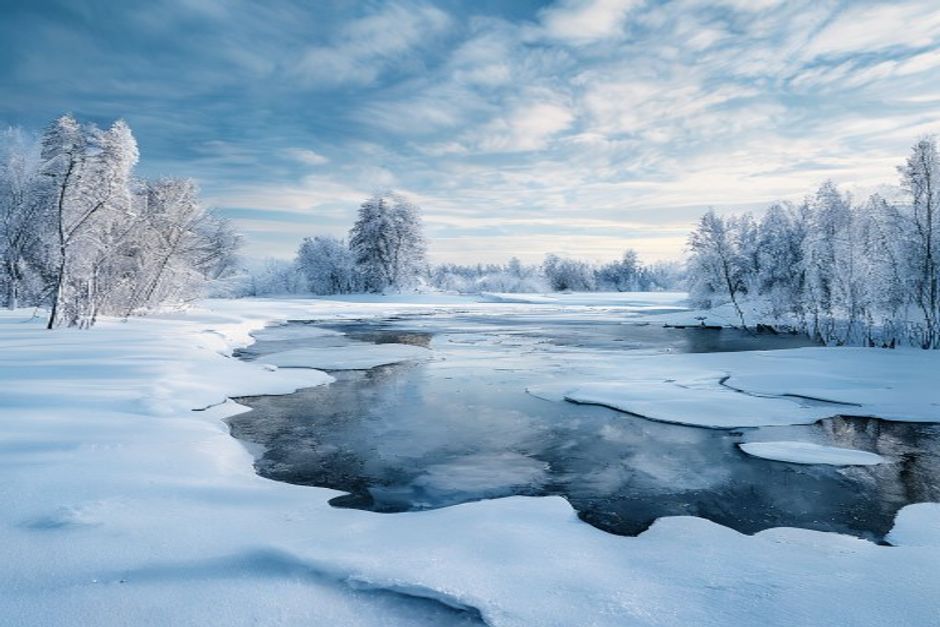
Ice management - what to do and what not to do
Maintaining an open area
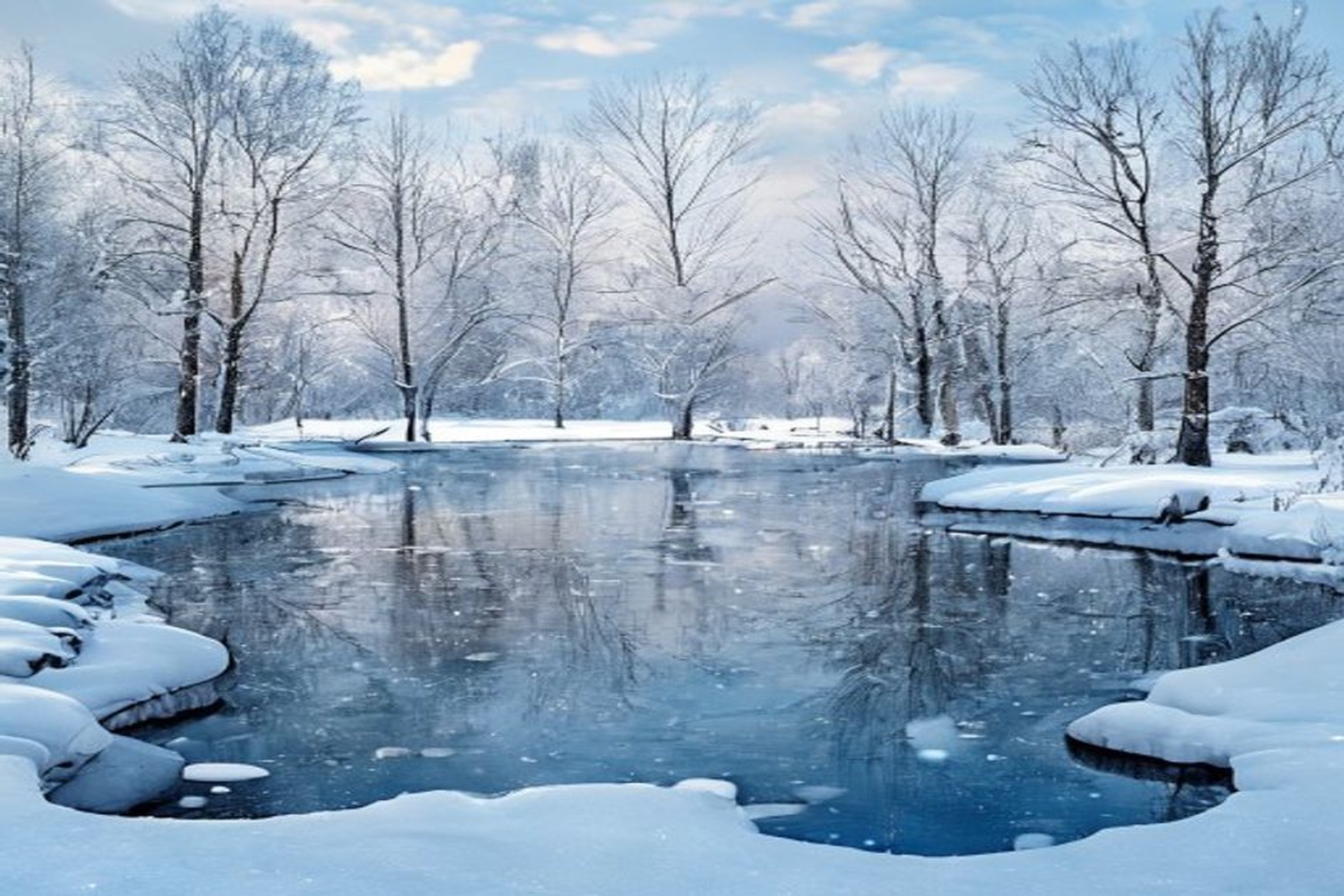
The most important principle of winter management is this: always maintain at least one area of the surface free of ice. This opening allows the evacuation of carbon dioxide and hydrogen sulphide accumulated under the ice and permits a minimum of fresh oxygen to enter.
The most effective methods for maintaining an open area are, in order of recommendation:
- Electric de-icer - the most reliable, operates automatically
- Aerator with diffuser stone - effective and economical
- Floating ball - a rubber or plastic ball partially filled with warm water, placed on the surface, delays local ice formation
- Pot of hot water - emergency method: place a pot of hot water on the ice to melt a circular area
What you should never do
Do not break the ice by striking it. This is the most common and most dangerous mistake. The shock waves generated by striking the ice propagate through the water with an intensity comparable to a small-scale underwater explosion. For fish in a state of hibernation, this stress can be fatal - it causes swim bladder injuries, internal haemorrhaging, and acute stress that compromises their immune system for weeks.
If the ice has formed completely and you have no aeration system, proceed as follows: heat a large pot of water and place it on the ice surface. Let it melt the ice gradually through thermal transfer. Repeat the process until you obtain an opening of at least 20-30 centimetres in diameter. It is a slower process, but incomparably safer for the pond's wildlife.
Snow on ice
A thick layer of snow on the ice blocks sunlight, stopping the photosynthesis of submerged plants and dramatically reducing the oxygen level in the water. If the snow layer exceeds 10-15 centimetres, clear at least one-third of the ice surface to allow light penetration. Proceed carefully so as not to damage thin ice, and work from the bank using a long-handled broom.
Need personalized advice? Our team offers free consultation for your project.
Schedule a consultation →Monitoring throughout the winter
Even a well-prepared pond requires periodic checks throughout the winter. Schedule a visual inspection every 5-7 days, watching for:
- The condition of the open area in the ice - is it large enough? Is the de-icer functioning?
- Water level - evaporation and sublimation continue through winter; top up with dechlorinated water if the level drops noticeably
- Equipment condition - check electrical cables, aerator operation, pipe integrity
- Signs of animal activity - predatory birds (herons in particular) can take advantage of open areas to hunt vulnerable fish
- Snow accumulation on the ice or on the protective net
Keep a simple journal of observations - air temperature, ice condition, any unusual events. These notes will be valuable for optimising preparations in future autumns and for diagnosing any spring problems.
Spring return checklist
Although this guide focuses on autumn preparation, it is useful to plan ahead for the steps to reactivate the pond at the end of winter. Here is the checklist we recommend to Iazuri Naturale clients:
- When the ice melts completely - check the water level and top up if necessary. Visually inspect the fish for signs of disease or injury.
- Water temperature reaches 8°C - clean the organic debris accumulated on the bottom. Restart the pump at reduced flow. Begin feeding fish with small portions of easily digestible food, once every 3-4 days.
- Water temperature reaches 12°C - restart the filtration system fully. Install the UV lamp. Introduce beneficial bacteria for recolonisation of the biological filter. Increase feeding frequency to once a day.
- Water temperature reaches 15°C - inspect and trim damaged aquatic plants. Fertilise water lilies with special aquatic fertiliser tablets. Return to the normal feeding schedule.
- Water temperature reaches 18-20°C - the pond is fully active. Test the water parameters (pH, ammonia, nitrites, nitrates) and adjust if necessary.
When to call the professionals
Preparing the pond for winter is a process that most owners can manage on their own, with the right knowledge and a little discipline. However, there are situations where professional assistance makes the difference:
- New ponds (under 2 years) - the ecosystem is not yet stabilised and requires extra attention during the first wintering
- Recurring water quality problems - if your pond has had issues with algae, cloudy water, or unpleasant odour in the past season, it is essential to address the cause before winter
- Valuable fish or special collections - high-quality koi or sensitive species require more rigorous wintering protocols
- Necessary structural modifications - if the pond lacks sufficient depth or if membrane or filtration system repairs are needed
- First winter after construction or renovation - every pond has unique characteristics that are often only discovered during the first complete cycle of seasons
The Iazuri Naturale team offers winter preparation services that include a complete pond inspection, professional cleaning, equipment checks, and a personalised monitoring plan. For ponds in our portfolio, we also offer a programme of periodic visits throughout the winter, ensuring that the ecosystem makes it safely through the hardest months.
The investment in preparation always pays off
A natural pond is a living ecosystem, complex and surprisingly resilient - if we give it the respect and attention it deserves. The few hours invested in autumn for proper preparation translate into months of peace of mind throughout the winter and a spectacular reward when spring arrives: clear water, vigorous plants, healthy fish, and that unique sense of harmony that only a well-maintained natural pond can offer.
Do not postpone preparations until the first frost. Start now, work systematically, and let nature do the rest. And if you need support or personalised advice for your pond, the Iazuri Naturale team is always at your disposal - just as it has been every season, since we built our first pond in the heart of Transylvania.