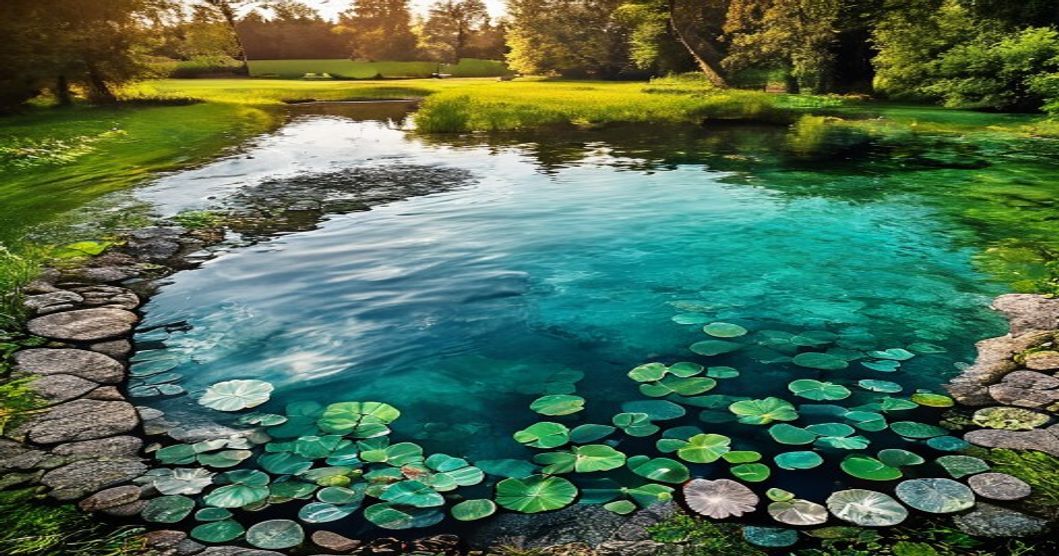
Crystal-clear water is the hallmark of a healthy natural pond - a balanced ecosystem where every element works in harmony. However, maintaining this clarity throughout the entire year is one of the most common challenges for pond owners. In this comprehensive guide, we'll explore the methods tested by Iazuri Naturale professionals, from biological filtration to seasonal care, so your pond remains pristine in every season.
Why does pond water become cloudy?
Before discussing solutions, it's essential to understand the causes. Cloudy water can be of three types, each with different mechanisms:
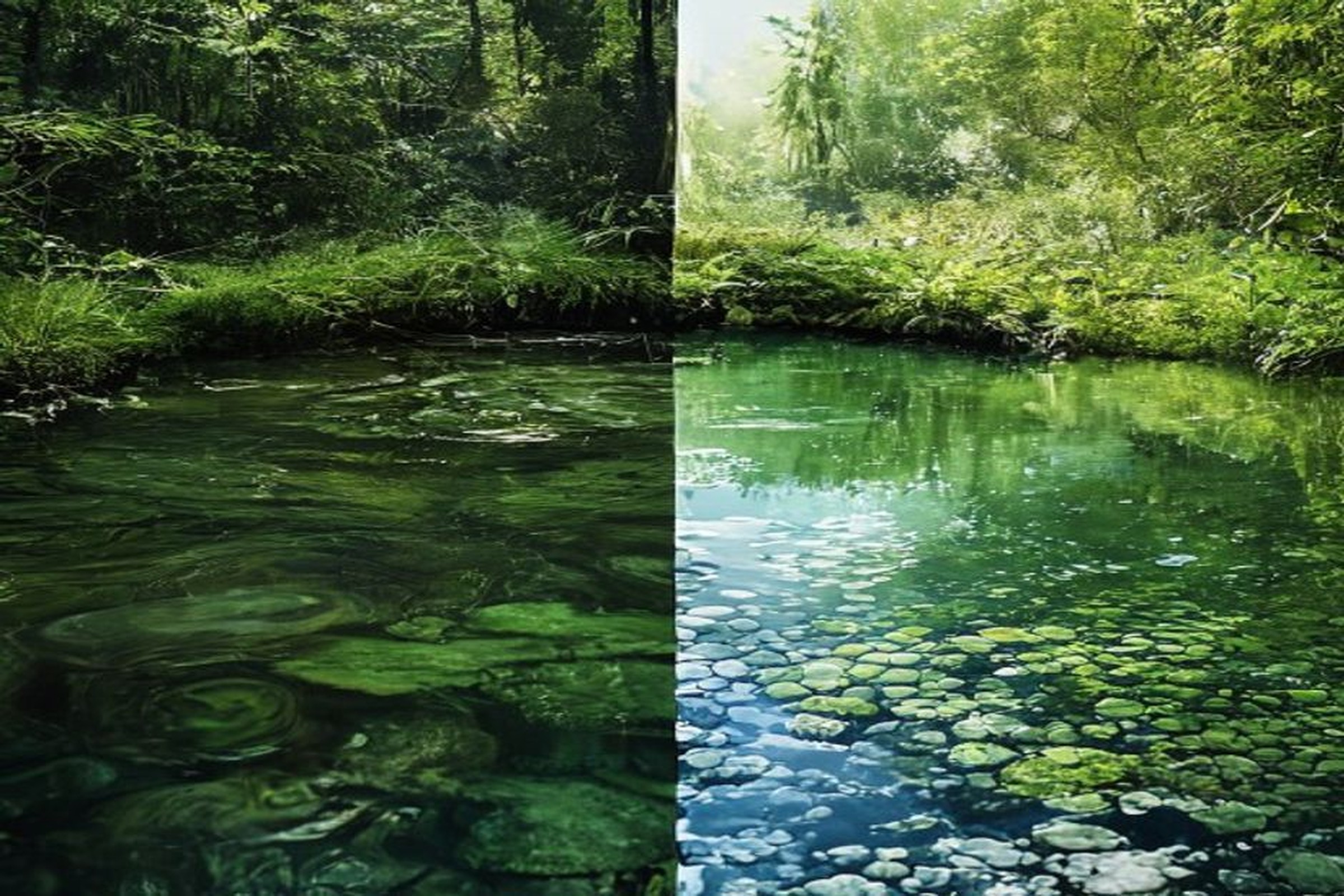
- Green water - caused by single-celled algae in suspension (phytoplankton). It appears when nutrient levels (nitrogen and phosphorus) are high and abundant sunlight stimulates algal growth. A pH above 8.5 and temperatures between 20–30°C accelerate the phenomenon.
- Brown or yellow water - the result of dissolved organic substances (tannins) released by leaves, decomposing plant material, or a peat-rich substrate.
- Milky or grey water - fine clay or silt particles remain in suspension, often after heavy rain or due to fish activity disturbing the substrate.
"A natural pond is not a pool of sterile water. It is a living ecosystem, and water clarity comes from the balance between plants, beneficial bacteria, and aquatic fauna." - Iazuri Naturale Team
Biological filtration: the foundation of clear water
Biological filtration is the most important mechanism for maintaining water quality in a natural pond. Unlike mechanical filtration (which retains physical particles), biological filtration relies on colonies of beneficial bacteria that transform toxic substances into harmless compounds.
The nitrogen cycle - in brief
Organic waste (leaves, fish excrement, uneaten food) releases ammonia (NH₃), a substance extremely toxic to fish even in small concentrations. Bacteria of the genus Nitrosomonas convert ammonia into nitrites (NO₂⁻), and then Nitrobacter bacteria transform nitrites into nitrates (NO₃⁻), which are much less toxic. Aquatic plants consume nitrates as a nutrient, closing the cycle.
This process requires:
- Colonisation surface - porous filter media (volcanic lava, bio-balls, sponges) provide habitat for bacteria. The greater the surface area, the more efficient the biological filter.
- Dissolved oxygen - nitrifying bacteria are aerobic. An optimal oxygen level (above 6 mg/L) is essential, especially in summer.
- Maturation time - a new biological filter needs 4–8 weeks to develop sufficient colonies. During this period, avoid adding a large number of fish.
Types of filtration systems
The correct choice of filtration system depends on the pond volume, number of fish, and available budget:
- Pressure filters (e.g. BioPressure) - compact, easy to install, ideal for ponds under 15,000 litres. They combine mechanical and biological filtration and often include an integrated UV-C steriliser.
- Gravity filters (chamber filters) - recommended for large ponds (over 20,000 litres). Water flows through multiple chambers with different filter media. Minimal maintenance, maximum efficiency.
- Regeneration zones - specific to natural swimming pools. A separate area of the pond, densely planted with aquatic plants, functions as a natural biological filter. Requires a minimum of 30–50% of the total water surface area.
The power of aquatic plants
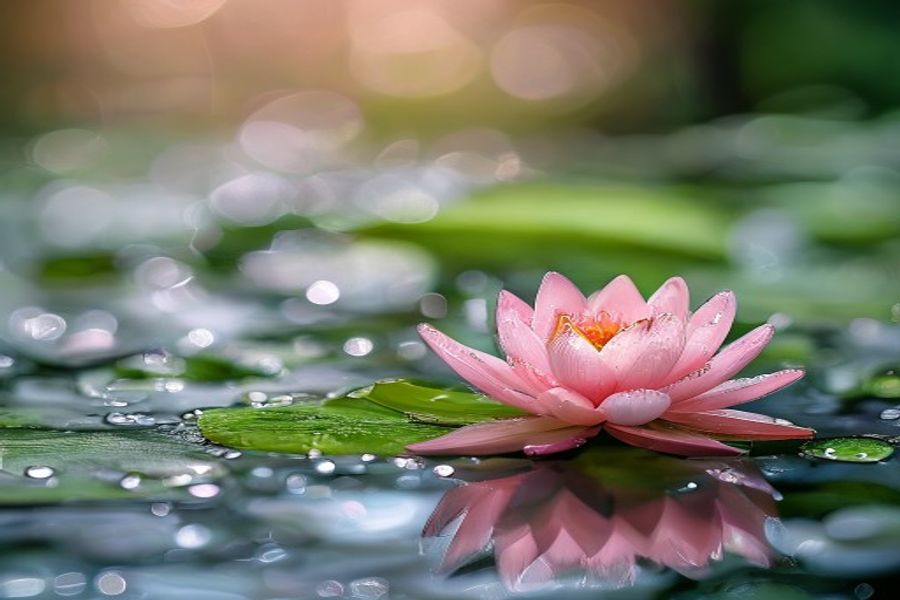
Aquatic plants are your most powerful ally in the fight for crystal-clear water. They extract nutrients from the water (depriving algae of "food"), oxygenate the water, and provide shade that limits algal growth.
Submerged plants (oxygenators)
These plants grow completely underwater and are the champions of clarity. They produce oxygen directly in the water column and consume significant amounts of nutrients:
- Ceratophyllum demersum (Hornwort) - extremely hardy, grows rapidly, tolerates temperatures from 4°C to 30°C. Ideal for new ponds as it establishes quickly.
- Myriophyllum spicatum (Eurasian watermilfoil) - fine, filament-like leaves that offer an enormous surface area for bacterial biofilm. Excellent for oxygenation.
- Elodea canadensis (Canadian waterweed) - grows fast and consumes many nutrients, but must be controlled to prevent it from becoming invasive.
Floating plants
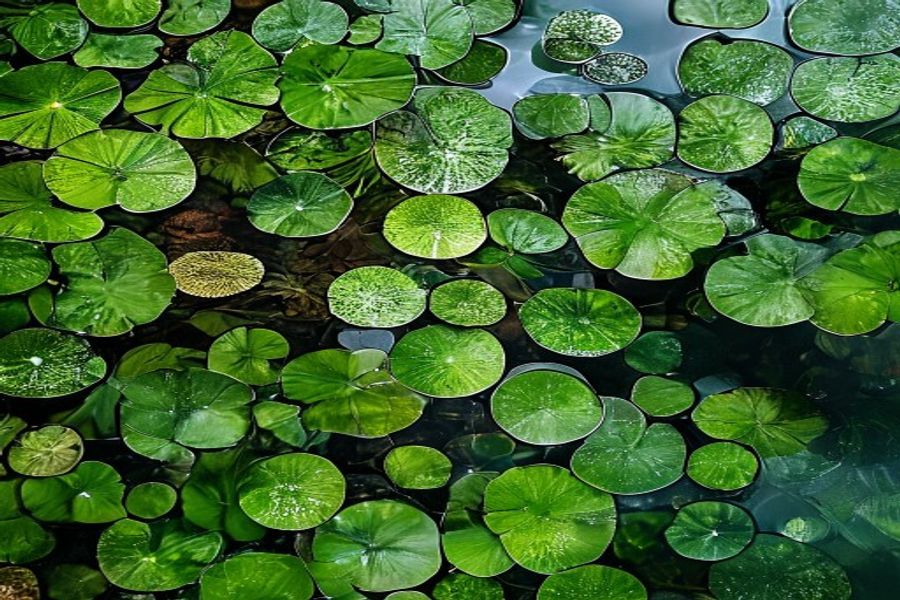
By covering the water surface, these plants block direct sunlight - the most effective method for preventing algal blooms. Recommendation: cover 50–70% of the water surface.
- Nymphaea spp. (Water lily) - the classic of natural ponds. Prefers depths of 40–100 cm, requires a minimum of 5–6 hours of sun per day.
- Nuphar lutea (Yellow water lily) - native to Romania, tolerates partial shade and flowing water.
- Pistia stratiotes (Water lettuce) - a tropical floating plant, excellent for nutrient absorption in summer. Added in May, it does not survive winter in the Romanian climate.
Marginal plants
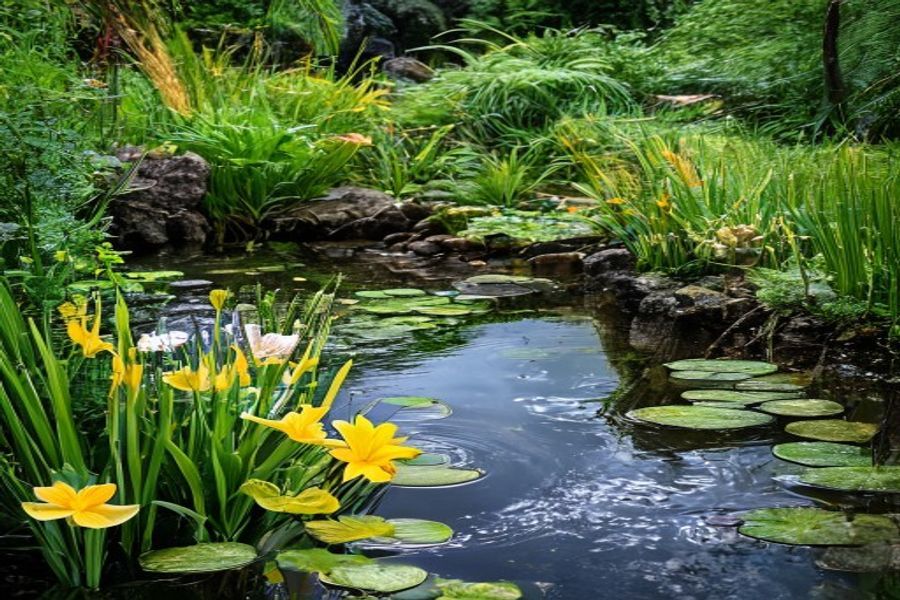
Planted in the littoral zone (0–20 cm depth), these species filter water entering the pond and add aesthetic value:
- Iris pseudacorus (Yellow flag iris) - native to Romania, spectacular yellow flowers, strong roots that stabilise the banks.
- Typha minima (Dwarf bulrush) - the compact version of the classic bulrush, ideal for smaller ponds.
- Caltha palustris (Marsh marigold) - one of the first plants to bloom in spring, signalling the return of the active season.
Iazuri Naturale designs and installs custom filtration systems for any type of pond.
View our services →Seasonal pond care calendar
Each season brings specific challenges. Follow this calendar for optimal results:
Spring (March – May)
Spring is the most important season for pond health throughout the rest of the year. As the water temperature exceeds 8–10°C, the ecosystem "awakens":
- General cleaning - remove leaves and debris accumulated over winter with a hand net or pond vacuum. Don't clean everything perfectly - a thin layer of sediment contains beneficial bacteria.
- Restarting filters - check the pump and filter, clean the filter media with pond water (never with tap water - chlorine kills beneficial bacteria).
- Test the water - check pH (ideal 7.0–8.0), KH (above 4°dH for stability), ammonia, and nitrites (both should be at 0).
- Add new plants - plant submerged and marginal species as early as possible to give them an advantage over algae.
- Bacterial treatment - beneficial bacteria supplements (commercially available) speed up the reactivation of the biological filter.
Summer (June – August)
Summer brings heat and maximum pressure on the ecosystem. High temperatures reduce dissolved oxygen and stimulate algal growth:
- Water aeration - if the water temperature consistently exceeds 25°C, a supplementary aerator may be necessary, especially at night when plants consume oxygen instead of producing it.
- Filamentous algae control - remove them manually with a fork or stick. Do not use chemical algicides in a natural pond - they also destroy beneficial algae.
- Fish feeding - feed moderately, only as much as they consume within 5 minutes. Uneaten food is the main source of excess nutrients.
- Water top-up - evaporation can be significant in summer. Top up with tap water left to stand for 24 hours (for chlorine evaporation) or, ideally, with rainwater.
Autumn (September – November)
Preparation for winter is essential for a good start in spring:
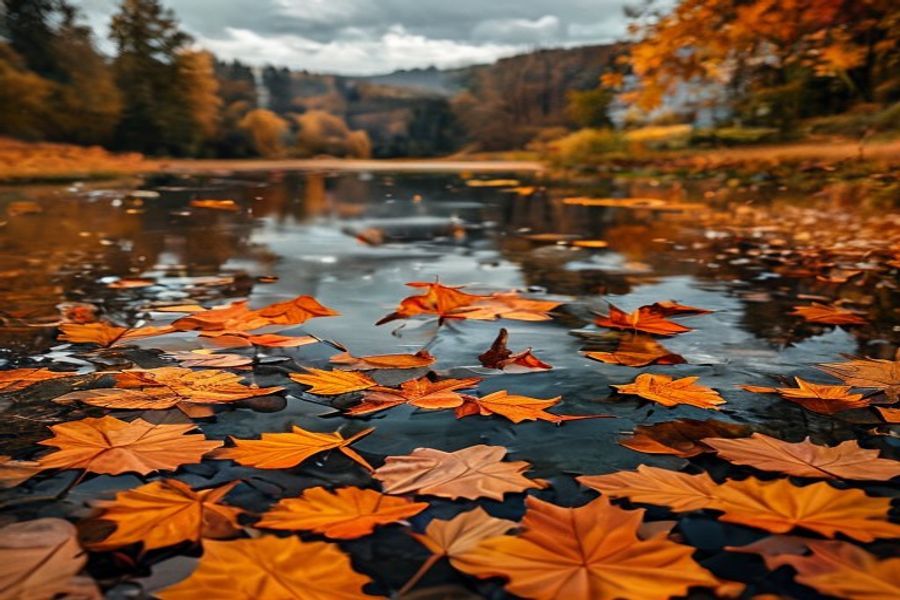
- Protective netting - install a net over the pond before leaves start to fall. Decomposed leaves are the main source of nutrients that will feed algae in spring.
- Trimming plants - cut yellowed marginal plants to 10–15 cm above water level. Leave submerged plants intact - they continue to oxygenate all winter.
- Reducing feeding - below 10°C, fish enter dormancy and should no longer be fed. Their digestive system slows down dramatically, and undigested food can harm them.
- Filter cleaning - one final thorough cleaning before winter, always using pond water.
Winter (December – February)
In winter, the pond enters "hibernation". Interventions should be minimal:
- Preventing complete freezing - a pond with a minimum depth of 80 cm will not freeze completely in the Romanian climate. However, a small air pump or a floating heater maintains an open area for gas exchange.
- Don't break the ice! - vibrations can stress or even kill fish in dormancy. If you need to open a hole, pour warm water onto the ice.
- Stop the main pump - if the pond has sufficient depth, stop the circulation pump. Circulating water in winter mixes the temperature layers, disrupting the warm zone at the bottom where the fish rest.
UV-C clarification: the technological ally
A UV-C steriliser is the most effective tool against green water (single-celled algae). Water passes through a chamber with ultraviolet light at 254 nm, which destroys the algae's DNA, preventing them from reproducing.
Practical recommendations:
- Required power - calculate a minimum of 2W per 1,000 litres of water. For a 10,000-litre pond, you need a UV-C unit of at least 20W.
- Lamp replacement - the UV-C lamp loses its efficiency after approximately 8,000 hours of operation (roughly one season). Replace it annually at the start of spring.
- Does not replace biological filtration - UV-C kills algae but does not remove nutrients. Without biological filtration, algae return immediately once the lamp is turned off.
Water testing: the numbers that matter
Regular water testing allows you to prevent problems before they become visible. Invest in a quality test kit and check these parameters at least twice a month:
- pH: 7.0–8.0 (ideal 7.5). Large pH fluctuations are more dangerous than a value slightly outside the range.
- KH (carbonate hardness): minimum 4°dH. KH acts as a buffer that prevents sudden pH changes. If it drops, add sodium bicarbonate (1 tablespoon per 1,000 litres).
- Ammonia (NH₃/NH₄⁺): should be 0 mg/L. Any detectable value indicates a problem with biological filtration.
- Nitrites (NO₂⁻): should be 0 mg/L. Elevated levels occur when the biological filter is overloaded or immature.
- Nitrates (NO₃⁻): below 25 mg/L. High levels promote algal growth. Solution: more plants and partial water changes (10–15% per week).
Need personalized advice? Our team offers free consultation for your project.
Schedule a consultation →7 golden rules for crystal-clear water
After years of experience in building and maintaining natural ponds, our team has distilled the most important principles:
- Don't overfeed fish - this is the number one cause of cloudy water. Less is always better.
- Invest in plants, not chemicals - a well-planted pond self-regulates. Chemicals offer temporary solutions with long-term side effects.
- Size the filter correctly - always choose a filter rated for a larger volume than your pond. There's no such thing as a filter that's "too big".
- Maintain constant aeration - oxygen is essential for beneficial bacteria, fish, and the decomposition of organic matter.
- Avoid sudden interventions - massive water changes, complete filter cleaning, or the use of chemical treatments destabilise the ecosystem. Proceed gradually.
- Protect the pond from leaves - a protective net in autumn saves months of problems in spring.
- Patience! - a new pond needs 6–12 months to reach its biological balance. Initial algae are normal and temporary.
When should you call a professional?
Although many problems can be solved with basic knowledge, there are situations that require specialist expertise:
- Water remains persistently green for more than 3 weeks, despite a functioning UV-C and correct filtration.
- Fish display abnormal behaviour (floating at the surface, rubbing against walls, loss of appetite).
- An unpleasant smell appears - this may indicate anaerobic build-up at the bottom of the pond.
- The water level drops consistently without apparent evaporation - a possible leak.
- You want to convert a traditional swimming pool into a natural pond - a project that requires careful planning of regeneration zones and circulation systems.
Iazuri Naturale offers free consultations and complete services for the design, construction, and maintenance of natural ponds. With over 150 completed projects throughout Romania, we can turn your vision into a pond with crystal-clear water that brings joy year after year.