
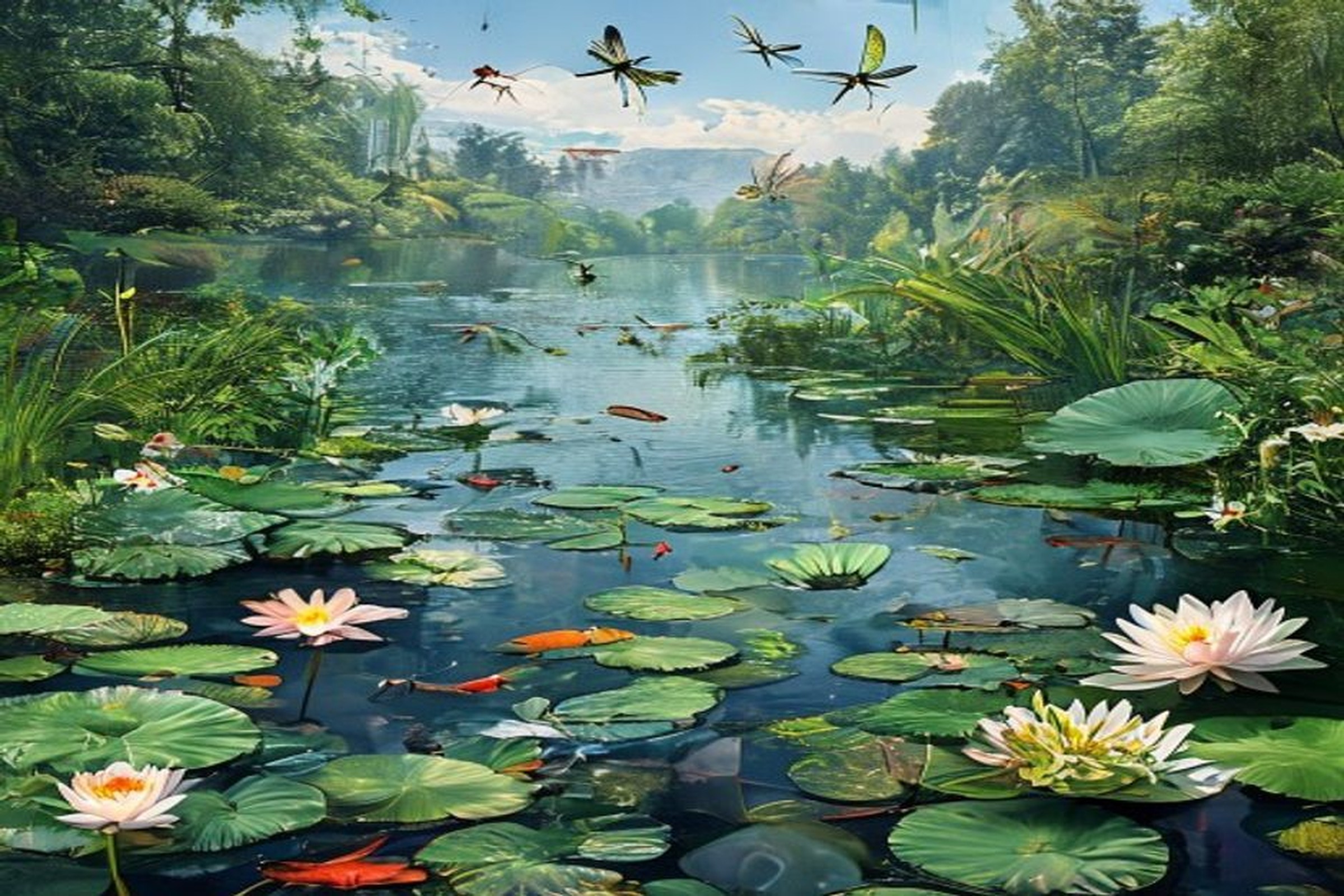
A natural pond is much more than a simple body of water in your garden. It is a living organism, a microcosm where plants, animals, bacteria, and minerals work together in a delicate balance. When this balance functions properly, the water stays clear, wildlife thrives, and maintenance becomes minimal. When it is disrupted, invasive algae, unpleasant odors, and fish mortality appear. In this detailed guide, the Iazuri Naturale team explains step by step how a balanced aquatic ecosystem works and what you can do to sustain it.
What does a balanced ecosystem mean?
A balanced ecosystem is one where every organism fulfills its role without any element dominating excessively. Plants absorb nutrients from the water, bacteria decompose organic matter, and aquatic fauna contributes to controlling insect and algae populations. This cycle is self-regulating - nature knows best how to manage resources, as long as we do not intervene incorrectly.
Think of the natural pond as a scale with multiple arms. On one arm sit the nutrients (nitrogen, phosphorus), on another - the plants that consume them, on the third - the bacteria that transform toxic substances into absorbable nutrients, and on the last - the fauna that keeps everything in motion. If any of these arms becomes too heavy or too light, the balance is lost.
In nature, lakes and ponds reach equilibrium through processes that take tens or hundreds of years. The advantage of a scientifically constructed pond is that we can accelerate this process to 6-12 months, providing optimal conditions for the ecosystem to establish itself from the very beginning. The key lies in correctly designing the depth zones, choosing the right plants, and having the patience to let nature do its work.
The four zones of a natural pond
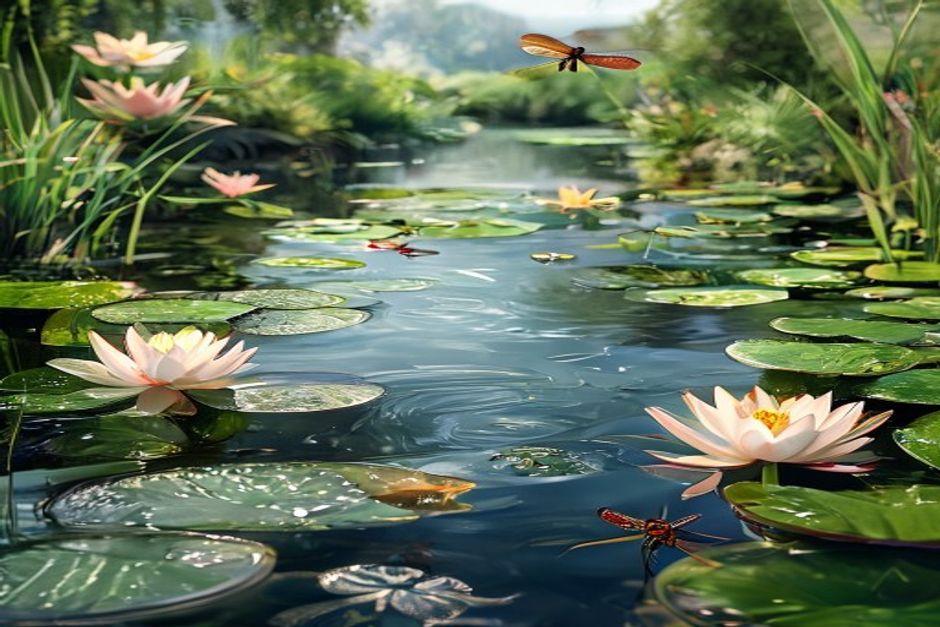
A well-designed natural pond is not simply a hole filled with water. It is structured into distinct depth zones, each with its precise ecological role. At Iazuri Naturale, we design every pond respecting these zones, because they are the foundation of a functional ecosystem.
The marginal zone (0-20 cm)
This shallow strip of water is where land meets water. Here grow plants such as Iris pseudacorus (yellow flag iris), Caltha palustris (marsh marigold), and various aquatic grasses. The marginal zone serves as a natural filter - the plant roots retain sediments and absorb excess nutrients before they reach the water. Additionally, it provides shelter for frogs, dragonflies, and other creatures that move between land and water.
The shallow zone (20-50 cm)
Here, submerged aquatic plants and those with floating leaves dominate. Nymphaea (water lilies), Myriophyllum (milfoil), and Ceratophyllum (hornwort) are some of the essential species. This zone is the main engine for oxygenation and biological filtration. We recommend that the shallow zone occupies at least 30-40% of the pond's total surface area.
The deep zone (50-100 cm and beyond)
The deep zone provides thermal stability - in summer the water stays cooler at the bottom, and in winter it does not freeze completely. This is the refuge zone for fish and amphibians during extreme weather periods. For a natural swimming pond, the deep zone typically reaches 1.5-2.5 meters. For ornamental ponds, 80-120 cm is usually sufficient. It is important that the walls are not vertical but descend gradually, with a maximum slope of 1:3 (one meter vertically for every three meters horizontally).
The regeneration zone
This is the heart of the natural filtration system. Partially separated from the swimming zone or the main area, the regeneration zone is densely planted with aquatic species and has a special substrate of gravel and volcanic rock that provides colonization surface for beneficial bacteria. Water flows slowly through this zone, being biologically purified. We recommend that the regeneration zone represents at least 40-50% of the total surface area of a natural swimming pond.
The nitrogen cycle: the invisible engine
If we had to choose a single process that defines a pond's health, it would be the nitrogen cycle. It is a process invisible to the naked eye, but absolutely essential. Without it, the water becomes toxic within a few weeks.
Everything begins with organic matter - fallen leaves, fish food residues, and aquatic fauna waste. Decomposing bacteria transform this organic matter into ammonia (NH₃), a substance that is highly toxic to fish even in small concentrations (above 0.02 mg/l it becomes dangerous).
This is where nitrifying bacteria of the genus Nitrosomonas come in. They transform ammonia into nitrites (NO₂⁻), which are also toxic, but less so than ammonia. Then, bacteria of the genus Nitrobacter take over and convert nitrites into nitrates (NO₃⁻). Nitrates are relatively harmless to aquatic fauna and - most importantly - are the preferred nutrient of aquatic plants.
Plants absorb the nitrates and use them for growth. Thus, the circle closes: organic matter, ammonia, nitrites, nitrates, plants, organic matter. When this cycle functions without blockages, the water remains clean and non-toxic. When it is blocked - for example, through a lack of nitrifying bacteria or an excess of organic matter - serious problems arise.
Iazuri Naturale designs and installs custom filtration systems for any type of pond.
View our services →The role of beneficial bacteria
Bacteria are the unsung heroes of any natural pond. Without them, the water would quickly become a toxic soup of ammonia and decomposing organic matter. A healthy pond harbors billions of beneficial bacteria that form a biofilm - a thin, viscous layer that covers every stone, root, and submerged surface.
For bacteria to thrive, they need three essential things:
- Colonization surface - the more surface area, the more bacteria. This is why we use substrate made of 8-16 mm gravel and porous volcanic rock (lava). One kilogram of volcanic rock provides a colonization surface of up to 300 m², compared to just a few square meters for simple gravel.
- Dissolved oxygen - nitrifying bacteria are aerobic, meaning they need oxygen. A dissolved oxygen level below 2 mg/l inhibits their activity. The optimal level is 6-8 mg/l.
- Constant water flow - water must flow slowly through the colonization zone, bringing nutrients and oxygen. A flow rate of 0.5-1 pond volume per day through the regeneration zone is ideal.
It is important to know that the biofilm needs 4-8 weeks to fully establish on new surfaces. This is why, when starting a new pond, the first few weeks are the most vulnerable. At Iazuri Naturale, we use starter bacteria cultures to accelerate this process and reduce the colonization time to 2-3 weeks.
Aquatic fauna: more than just fish
When thinking about a pond, most people think of fish. But a healthy aquatic ecosystem is much more complex and includes a diversity of organisms, each with its precise role.
Aquatic snails
Pond snails (Lymnaea, Planorbis) are the cleaning crew. They feed on algae that grow on stones, walls, and plant stems, keeping surfaces clean. A 20 m² pond can comfortably support 30-50 snails. They require no supplementary feeding and reproduce on their own according to available resources.
Dragonfly larvae
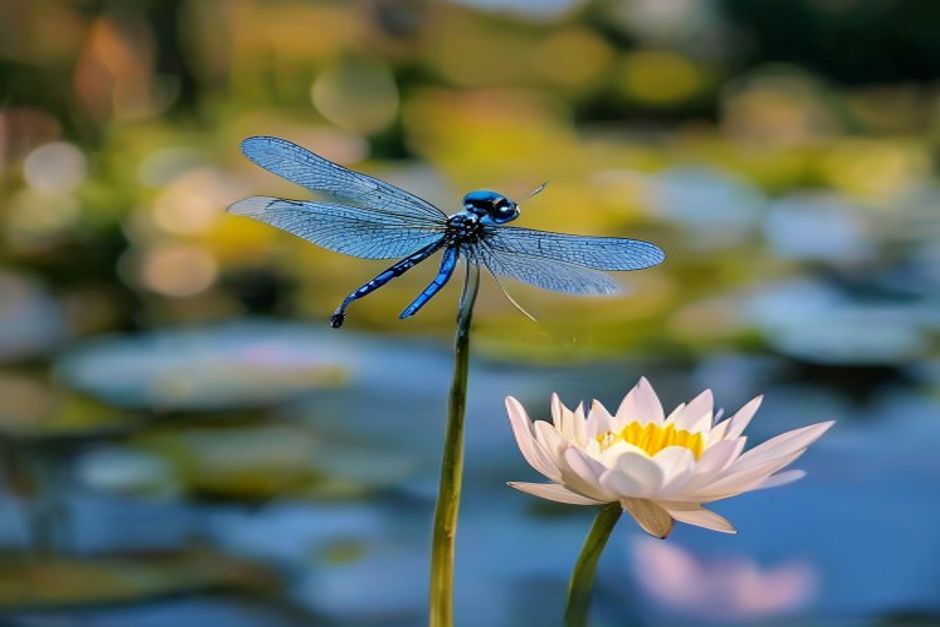
Dragonflies lay their eggs in water, and their larvae spend 1-3 years in the aquatic environment before transforming into adults. Throughout this time, the larvae are voracious predators that consume mosquito larvae, small worms, and even fry. The presence of dragonflies is an excellent indicator of a healthy ecosystem.
Frogs and newts
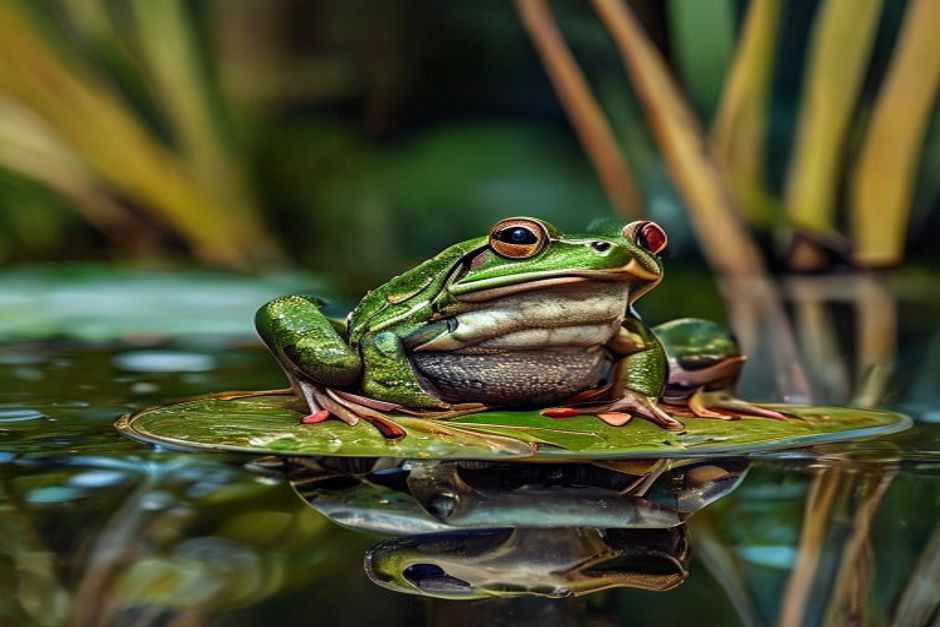
Amphibians control insect populations both in water (as larvae) and on land (as adults). Green frogs (Pelophylax) and smooth newts (Lissotriton vulgaris) are frequent visitors to natural ponds in Transylvania. Do not introduce them by force - they will come on their own if the habitat is suitable. Make sure there are easy exit areas from the water (stones, platforms with gentle slopes) so that amphibians can enter and leave freely.
Fish
Fish can be a beautiful addition, but they must be introduced with caution. An overpopulated pond produces excess waste, which overwhelms the nitrogen cycle. The general rule is a maximum of 1 small fish (10-15 cm) per 500 liters of water. For a 10,000-liter pond, this means a maximum of 20 fish. Local species, such as minnows or chub, are preferred over exotic ones, as they are adapted to the local climate and do not destabilize the ecosystem.
Oxygenation: the pond's breathing
Dissolved oxygen is essential for every biological process in the pond - from fish respiration to the activity of beneficial bacteria. Without enough oxygen, the ecosystem collapses: anaerobic bacteria take over, producing hydrogen sulfide (the rotten egg smell), and fish suffocate.
The main sources of oxygen in a natural pond are:
- Submerged aquatic plants - through photosynthesis, plants produce oxygen during the day. Species such as Elodea canadensis, Ceratophyllum demersum, and Myriophyllum spicatum are the most efficient oxygenators. Note - at night, the process reverses, and plants consume oxygen. This is why diversity of oxygenation sources is important.
- Exchange with the atmosphere - the water surface absorbs oxygen from the air. The more agitated the surface is (from wind, waterfalls, or water features), the more efficient the exchange. A small waterfall of 30-50 cm in height can increase the dissolved oxygen level by 2-3 mg/l.
- Water movement - circulation generated by pumps prevents thermal stratification, ensuring that oxygenated water from the surface mixes with oxygen-depleted water from the bottom. A circulation flow rate of 1-2% of the total volume per minute is sufficient.
The optimal dissolved oxygen level is 6-10 mg/l. Below 4 mg/l, fish become stressed. Below 2 mg/l, the situation becomes critical. You can monitor oxygen levels with simple test kits available at specialty stores or with a digital oximeter for more precise measurements.
"A well-designed natural pond does not need complicated oxygenation equipment. If the depth zones are correct, the plants are sufficient and diverse, and the water circulates through the regeneration zone, nature takes care of itself. We do not fight nature - we help it do what it does best."
- The Iazuri Naturale Team
Need personalized advice? Our team offers free consultation for your project.
Schedule a consultation →Nutrient balance
Nutrients - especially nitrogen and phosphorus - are the fuel of the aquatic ecosystem. In the right amounts, they feed plants and sustain the cycle of life. In excess, they cause algae blooms, green water, and serious imbalances. Nutrient management is, in essence, the art of maintaining this balance.
The main sources of excess nutrients are:
- Fish food - uneaten food decomposes and releases ammonia and phosphorus. Feed your fish only as much as they can consume in 2-3 minutes. Anything that remains on the pond bottom is pollution.
- Fallen leaves - in autumn, leaves that reach the pond decompose and release nutrients. Install a protective net during October-November or remove leaves manually on a regular basis.
- Lawn runoff - fertilizers applied to nearby lawns can be washed by rain into the pond. Maintain a buffer zone of at least 1-2 meters of natural vegetation around the pond and avoid fertilizing the lawn in the immediate vicinity.
- Rainwater from roofs and paths - can carry dust, pollen, and nutrients. If you direct rainwater toward the pond, do so through a planted filter or a gravel channel.
- Fish overpopulation - more fish means more waste. Follow the maximum density rule mentioned earlier.
A simple indicator of nutrient levels is water clarity. If you can see the pond bottom at a depth of at least 60-80 cm, the nutrient level is probably fine. If the water is permanently cloudy or green, it is a sign that nutrients exceed the plants' absorption capacity. The solution is not chemicals - but more plants and reducing nutrient sources.
The first year: patience and realistic expectations
This is perhaps the most important chapter in the entire guide. Most problems with natural ponds do not arise from faulty design, but from a lack of patience in the first year.
Here is what to expect:
Weeks 1-4: the pioneer phase
The water is clear at first, then becomes slightly cloudy as substances from the substrate dissolve. The plants seem not to be growing - but underwater, their roots are spreading. Bacteria begin colonizing surfaces. This is normal and you should not intervene.
Months 2-3: the algae bloom
This is the phase that panics most pond owners. The water turns green, sometimes almost opaque. This is completely normal. Single-celled algae multiply rapidly because nutrients are available, but bacteria and higher plants have not yet established sufficiently to compete with them. Do not add chemicals, do not empty the pond, do not change the water. This is a natural phase that will pass on its own.
Months 3-6: stabilization
Plants begin to grow visibly. The bacterial biofilm has formed on the substrate. Green algae begin to recede gradually, and the water becomes increasingly clear. You can introduce the first snails and, eventually, a few fish (not before month 3). Dragonflies and other insects begin visiting the pond.
Months 6-12: maturation
The ecosystem becomes functional. The water is predominantly clear, with possible brief episodes of algal blooms during heat waves - which is normal even in natural lakes. Plants cover the planned zones. Aquatic fauna has diversified. The nitrogen cycle operates at optimal capacity.
Remember: a natural pond reaches full ecological maturity in 2-3 years. The first year is the ecosystem's construction period. Patience during this time is the most important "investment" you can make.
Signs of a healthy vs. imbalanced ecosystem
Learn to read the signs your pond is sending you. An aquatic ecosystem communicates constantly through visual and biological indicators.
Signs of health
- Clear water - you can see the bottom at a depth of at least 60-80 cm
- Active fish - swimming energetically, feeding normally, vivid coloring
- Biological diversity - presence of snails, dragonflies, frogs, water spiders
- Vigorous plants - healthy growth, green leaves, no spots or discoloration
- Controlled algae - a thin layer of algae on stones is normal and healthy
- Neutral smell - the water of a healthy pond smells like damp earth, not decay
- Nocturnal activity - frogs singing, dragonfly larvae hunting - signs of abundant life
Warning signs
- Permanently green or cloudy water - indicates excess nutrients and chronic algal blooms
- Fish gasping at the surface - dissolved oxygen deficit, potentially critical
- Unpleasant odor - anaerobic decomposition, possibly hydrogen sulfide - requires immediate intervention
- Persistent foam - excess organic matter in decomposition
- Abundant filamentous algae - large clumps of thread-like algae indicate nutrient imbalance
- Decomposing plants - yellow leaves, soft stems - possibly insufficient light or inadequate substrate
- Absence of fauna - if no dragonflies, frogs, or birds come - the ecosystem is not functioning properly
Periodically monitor the water parameters. A basic test set should include: pH (ideally between 6.8 and 8.0), ammonia (below 0.1 mg/l), nitrites (below 0.3 mg/l), nitrates (below 50 mg/l), and phosphates (below 0.035 mg/l). Test at least once a month during the first year and at each seasonal change thereafter.
When nature needs help
Our philosophy at Iazuri Naturale is simple: minimal intervention produces the best results. But there are situations when nature needs a boost. The trick is knowing when to intervene and when to be patient.
Let nature work when:
- The water is slightly cloudy in the first months - this is the stabilization phase
- A green algae bloom appears in the first year - it will pass on its own within 4-8 weeks
- Plants grow more slowly than you expect - they need time to establish (1-2 seasons)
- A few yellow leaves appear on plants - this is a natural renewal process
- The snail population fluctuates - it self-regulates according to available resources
Intervene actively when:
- Fish are gasping at the surface - start an emergency aerator or a garden hose creating bubbles. Check the oxygen level and identify the cause of the deficit.
- Rotten egg smell (hydrogen sulfide) - a sign of anaerobic decomposition at the bottom. Improve water circulation and consider vacuuming the sludge from the bottom.
- Filamentous algae cover more than 30% of the surface - remove them manually (they are excellent composting material), then investigate the source of excess nutrients.
- pH drops below 6.5 or rises above 8.5 - this may indicate problems with the substrate or the water source. Consult a specialist.
- Appearance of invasive species - plants like Elodea nuttallii or American crayfish must be removed immediately, before they colonize the entire pond.
- Water level drops constantly - check the waterproofing membrane for possible punctures.
Recommended seasonal maintenance
Even a well-balanced pond benefits from minimal seasonal attention:
- Spring - trim dried vegetation from the previous year, check the pump and circulation system, test water parameters after winter
- Summer - top up the water level if necessary (use dechlorinated water), remove dead plants, monitor temperature (ideally below 25°C)
- Autumn - install a leaf protection net, reduce fish feeding as the temperature drops below 15°C, trim plants that have spread excessively
- Winter - maintain an ice-free zone (using an anti-freeze device or aerator) for gas exchange, do not break the ice by force - the shock can stress the fish
A well-designed and constructed natural pond requires an average of 2-4 hours of maintenance per month during the warm season and virtually none in winter. This is a fraction of the time needed for a conventional chemically treated pool - and the satisfaction of watching a living, balanced ecosystem is incomparable.
If you have questions about how to create or maintain a balanced ecosystem in your natural pond, the Iazuri Naturale team is at your service. With our experience in designing and building natural ponds in Transylvania, we can guide you from design all the way through to the complete maturation of the ecosystem.