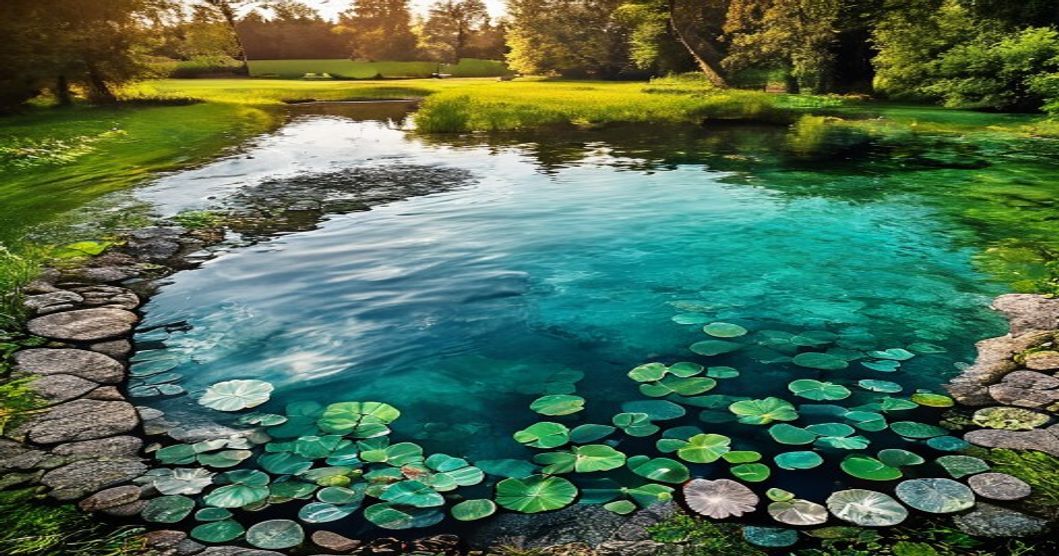
A healthy garden pond with crystal-clear water is no accident. Behind every natural pool that looks impeccable lies a well-chosen and correctly sized filtration system. Whether you have a small ornamental pond, a natural swimming pond, or a koi fish basin, the filter is the central element that makes the difference between clear, oxygenated water full of life - and cloudy, algae-filled water with an unpleasant smell. In this guide, the Iazuri Naturale team explains step by step how different types of filters work, how to size them correctly, and what mistakes to avoid.
Why is the filter the most important piece of equipment?
Many pond owners invest significant sums in aquatic plants, decorative fish, and spectacular landscaping, but neglect the filtration system. It's like building a beautiful house without plumbing - it looks great at first, but problems appear quickly.
The filter performs several essential functions simultaneously:
- Removes suspended particles - plant debris, pollen, dust, fish waste, and other impurities that make the water cloudy.
- Breaks down toxic substances - ammonia and nitrites produced by fish and by the decomposition of organic matter are transformed into less harmful nitrates through the nitrification process.
- Maintains biological balance - a well-sized filter supports colonies of beneficial bacteria that keep the pond ecosystem stable.
- Prevents algae proliferation - by reducing available nutrients and, in combination with UV-C, by destroying single-celled algae.
- Protects fish health - constantly filtered water reduces fish stress and the risk of disease.
A pond without a filter can only function under very specific conditions: a large volume of water, very low fish density (or no fish at all), abundant aquatic plants, and a regeneration zone with gravel. For most garden ponds, a dedicated filtration system is mandatory.
Mechanical vs. biological vs. UV-C filtration
Before choosing a specific filter, you need to understand the three fundamental filtration principles. A complete system combines all three for optimal results.
Mechanical filtration
This is the first stage of filtration and works on a simple principle: water passes through a filter medium that retains solid particles. Think of it as a very fine sieve. Materials used include sponges with pores of different sizes (from 10 to 45 PPI - pores per inch), filter cloth, filter brushes, or stainless steel screens in the case of drum filters.
Mechanical filtration removes:
- Suspended particles larger than 20-300 microns (depending on the filter medium)
- Leaves, grass clippings, and plant debris
- Fish waste and food remnants
Biological filtration
This is the heart of any high-performance filtration system. It works through colonies of nitrifying bacteria that develop on large contact surfaces. These bacteria transform the toxic ammonia (NH3) produced by fish into nitrites (NO2), then into nitrates (NO3) - a much less dangerous substance that is absorbed by plants as a nutrient.
Biological filter media include:
- Bio-balls - plastic balls with a large surface area, lightweight and easy to clean
- Volcanic lava - a natural material with excellent porosity, approximately 250-300 m² of active surface per cubic metre
- Sintered ceramic - the most efficient biological substrate, with an active surface of over 800 m² per cubic metre
- Japanese matting (Jap mat) - high-density synthetic cloth, very popular in gravity filters
It's important to know that a biological filter needs 4 to 8 weeks to fully mature - that is, for bacteria to sufficiently colonise the filter medium. During this period, the pond is vulnerable to ammonia spikes.
UV-C sterilisation
Type C ultraviolet light (with a wavelength of 254 nm) destroys the DNA of single-celled algae, bacteria, and parasites in the water. It is not a filter in the traditional sense, but rather a steriliser that complements mechanical and biological filtration. UV-C causes dead algae to clump together into larger particles that are easily retained by the mechanical filter.
Pressure filters: compact and efficient
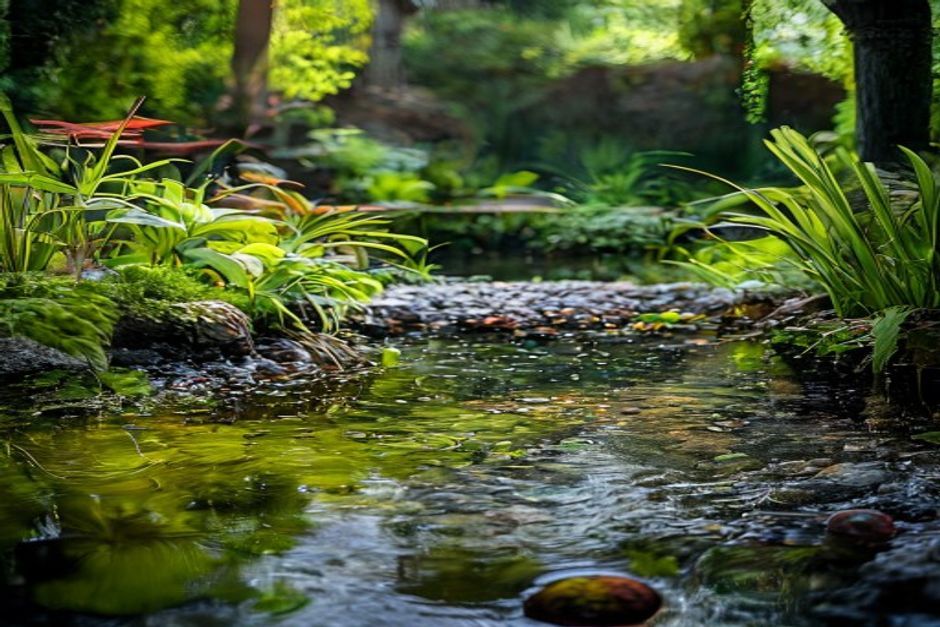
Pressure filters are the ideal choice for small and medium ponds, with volumes of up to 30,000 litres. Their great advantage is that they can be partially buried in the ground and can feed a waterfall or stream - the pump pushes water through the filter under pressure, and the filtered water can be directed to a point higher than the pond level.
How they work
Water is pumped from the pond and enters the filter body under pressure. It passes through sponges with different levels of porosity (mechanical filtration), then through bio-balls or another substrate (biological filtration). Most modern models also include an integrated UV-C steriliser. The cleaned water exits the filter under pressure and can be directed to any point, including the top of a waterfall.
An excellent example of a pressure filter is the BioPressure range, available at shop.iazurinaturale.ro. These filters combine all three types of filtration in a single compact unit, with an easy cleaning system through a back-wash mechanism.
Advantages
- Simple installation - can be buried at ground level
- Can feed waterfalls and streams (water exits under pressure)
- Easy maintenance - cleaning via back-wash without opening the filter
- Integrated UV-C in most models
- Affordable price for small and medium ponds
Limitations
- Not suitable for large ponds (over 30,000 litres)
- Biological capacity is lower compared to gravity filters
- Requires more frequent cleaning in ponds with many fish
Iazuri Naturale designs and installs custom filtration systems for any type of pond.
View our services →Gravity filters: power for large ponds
For ponds with volumes between 10,000 and 100,000 litres, gravity filters are the gold standard. They work on the principle of gravity - water from the pond flows naturally through the filter (the water level in the filter is equal to that in the pond), and a pump placed after the filter returns clean water to the basin.
Typical configurations
A complete gravity system usually includes several chambers arranged in series:
- Vortex or settling chamber - the first stage, where heavy particles settle to the bottom through the circular movement of water.
- Mechanical filtration chamber - equipped with filter brushes or coarse sponges that retain medium-sized particles.
- Biological filtration chamber - filled with biological substrate (Japanese matting, bio-balls, lava) where the nitrifying bacteria do the heavy work.
- Pump chamber - the recirculation pump sends clean water back to the pond.
"We've installed hundreds of filtration systems over the years and I can say with certainty: a correctly sized and regularly maintained gravity filter will keep your pond water crystal-clear year after year. The secret isn't the most expensive equipment, but the right choice for the volume and type of your pond." - Iazuri Naturale Team
Drum filters
Drum filters represent the pinnacle of mechanical filtration technology and are the preferred solution for very large ponds (over 50,000 litres), professional koi ponds, and natural swimming ponds. They use a cylindrical stainless steel screen with openings of 40-80 microns that rotates and self-cleans.
Operating principle
Water enters the inside of the drum and passes through the fine screen towards the outside. Particles are retained on the inner surface of the screen. When the screen becomes clogged (detected by level sensors), a pressurised shower system automatically cleans the screen, and impurities are discharged through a drain channel. The entire process is automated.
Advantages
- Fully automatic self-cleaning - no manual intervention needed
- Superior mechanical efficiency - retains particles down to 40 microns
- Large processing capacity - models from 20,000 to over 100,000 litres per hour
- Long lifespan - the stainless steel screen lasts 15-20 years
UV-C sterilisers: the weapon against green water
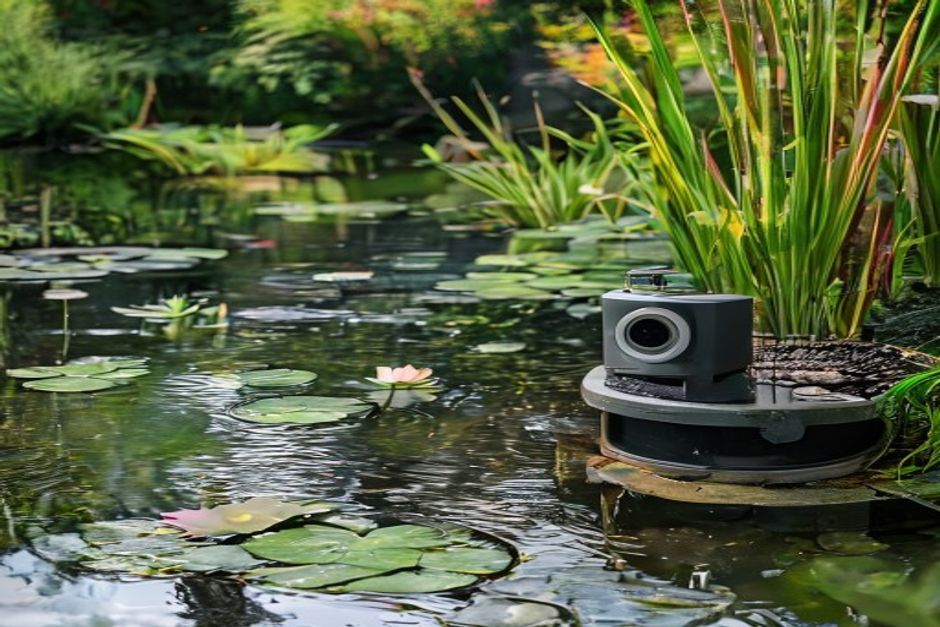
If you've ever experienced the problem of green water in your pond - that pea-soup hue caused by single-celled algae in suspension - you know how frustrating it can be. Mechanical filters cannot retain them (they are too small, between 2 and 10 microns), and biological filtration does not eliminate them directly. This is where the UV-C steriliser comes in.
How it works
Water passes through a chamber containing a UV-C light tube (254 nm). This radiation destroys the DNA of single-celled algae, pathogenic bacteria, and parasites. The dead algae then clump together into larger particles (a process called flocculation) that are easily retained by the mechanical filter. The result: crystal-clear water within 5-14 days of starting the system.
The AlgClear UV-C range offers UV-C sterilisers of different power ratings, suitable for ponds from 5,000 to over 50,000 litres.
UV-C sizing rules
- Ornamental pond without fish: 1 Watt UV-C per 1,000 litres of water
- Pond with ornamental fish: 2 Watt UV-C per 1,000 litres of water
- Koi pond or high fish density: 3-4 Watt UV-C per 1,000 litres of water
UV-C tubes should be replaced every year at the start of the season - UV intensity drops significantly after 8,000-10,000 hours of use.
Need personalized advice? Our team offers free consultation for your project.
Schedule a consultation →How to correctly size the filtration system
Step 1: Calculate the pond volume
Use the formula: Length (m) x Width (m) x Average Depth (m) x 1,000 = Volume (litres). For irregular shapes, estimate the surface area as a rectangle and subtract 20-30%.
Step 2: Apply correction factors
- Koi fish: multiply the volume by 2
- Full sun exposure: multiply by 1.3
- Many trees nearby: multiply by 1.2
- High fish density (over 1 kg per 1,000 litres): multiply by 1.5
Example: a 20,000-litre pond with koi, exposed to sun = 20,000 x 2 x 1.3 = 52,000 litres required filter capacity.
Step 3: Choose the pump flow rate
The pump should recirculate the entire volume once every 2-3 hours for ponds with fish, or once every 4-6 hours for ornamental ponds.
Filter maintenance: annual calendar
Spring (March - April)
- Start the filter when the water temperature consistently exceeds 8-10°C
- Replace the UV-C tube
- Gently clean the sponges with pond water (never tap water)
- Add starter bacteria to accelerate filter maturation
Summer (May - September)
- Clean the mechanical filter every 1-2 weeks
- Monitor water parameters monthly: pH, ammonia, nitrites
- Never stop the filter for more than 2-3 hours in summer
Autumn (October - November)
- Continue running the filter until the water temperature drops below 8°C
- Thoroughly clean the mechanical filter before shutting down
Winter (December - February)
- Stop the filter when the water temperature drops below 5°C
- Completely drain the filter, pump, and pipes to prevent freezing
- Store the pump in a bucket of water, in a frost-free space
The most common mistakes when choosing a filter
- Undersizing the filter - always choose a filter at least 30% larger than the calculated volume. If you're hesitating between two sizes, choose the bigger one.
- Skimping on UV-C - an undersized UV-C steriliser or its absence will inevitably lead to green water in summer.
- Turning off the filter at night - the bacteria in the biological filter need a continuous flow of oxygenated water. The filter must run 24/7 throughout the entire season.
- Excessive cleaning of the biological filter - never clean the biological substrate with tap water. Rinse it gently only with pond water.
- Wrong pump - a pump that's too powerful reduces the contact time with the biological substrate. Check the maximum flow rate recommended by the filter manufacturer.
- Undersized pipes - pipes that are too narrow create resistance and reduce the effective flow rate.
- Placing the filter far from the pond - ideally, the filter should be placed no more than 3-5 metres from the pond edge.
Choosing the right filtration system doesn't have to be complicated if you follow the steps in this guide. And if you need personalised help, the Iazuri Naturale team is always available for a free consultation - whether you have a small ornamental pond or are planning an ambitious natural swimming pond project.